

Disclaimer:
The movie I’m reviewing this week is rated: PG-13
Not every scene is unsuitable for children, but there will be things like violence, domestic abuse, and sexual themes.
These disclaimers are also trigger-warnings for those who’re bothered by such things.
If that’s the case for you, it’s probably best you sit this one out.
Happy Valentine’s Day, everyone! Let’s celebrate with a rather… “unconventional” love story. That’s putting it mildly. With it being the Day of Love, it’s important to remember the various ways love can appear in everyday life. In the case of this film, the strongest bond is between two sisters. Although, that’s not the only way this film portrays love. It can also show itself as friendship, dedication, and even forgiveness.
Needless to say, this movie touches on each of those forms of love.
Based on the 1982 Alice Walker novel of the same name, The Color Purple was a movie most audiences didn’t expect a film-maker like Spielberg to make. A heavy drama about the experience of a Black woman from 1909-1949 was certainly different. Not unwelcome, though. The film garnered a lot of attention from high-profile organizations. Even scoring 11 Oscar nominations. However, what’s especially interesting is the cast.
Our main stars include such big names as Whoopi Goldberg, Danny Glover, and Oprah Winfrey. Yes, that Oprah Winfrey. Although, this movie was released before any of these people became the household names they are today. Is it possible this movie had a hand in kick-starting their careers? And, does it still hold up today? I’ve only seen this movie once before, and the 2023 musical remake, so it looks like I’ll need to study.
With that said, let’s turn back time to the early 1900s and re-examine the life of Celie Harris Johnson in The Color Purple.
Since this film is adapted from a novel, what drives the narrative is dialogue and characterization. To be fair, this movie thrives on those moments. For a story like this, you really need the right actors for the right parts. Given the cast, I’d say they nailed it.
There isn’t a single bad performance in this film. It’s all raw, emotional, and deeply relatable. Let’s go character by character to get a better idea.
First we have Celie herself. The first half hour of the film shows Celie as a young woman (played by Desreta Jackson).

In the beginning, she’s calm, free-spirited, loving, and innocent. Partly because she has her sister, Nettie (played by Akosua Busia), to look after her. Unfortunately, Jackson doesn’t get much time to shine in the film (as she’ll later be overshadowed by Goldberg’s performance). Although, for the time she is on screen, she sets up Celie’s character very well. We instantly understand her struggles, relate to them, and feel for her in the process.
Although, given the subject-matter, it’s easy to feel bad for Celie. She’s already the product of a broken home. Her own father (not biological [and played by Leonard Jackson]) r—s her so he can sell her babies.
…Yeah.
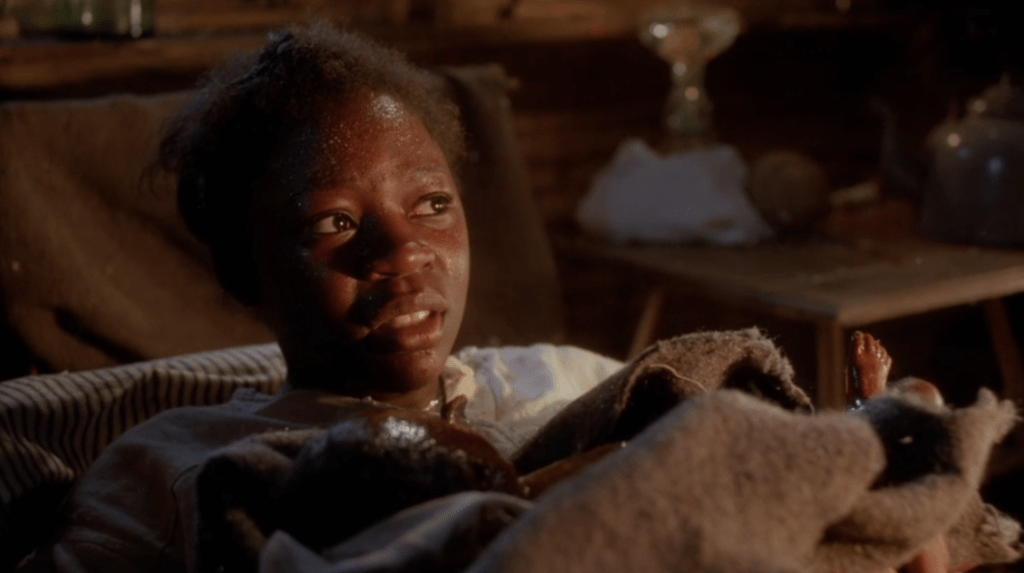


This movie gets heavy, y’all.
You think that’s bad enough, but there’s more. To top it all off, she gets sold to an abusive husband (played by Danny Glover). Celie can only ever call him “Mister” which helps signify his ownership over her. Not to mention, Glover is freakin’ terrifying in this role. This is the first time we see him.

I’ve seen some creep faces in my day, but this is next-level!
He’s the kind of person whom you never forget. Because he haunts your nightmares. Also because he makes shaving a life-or-death scenario.

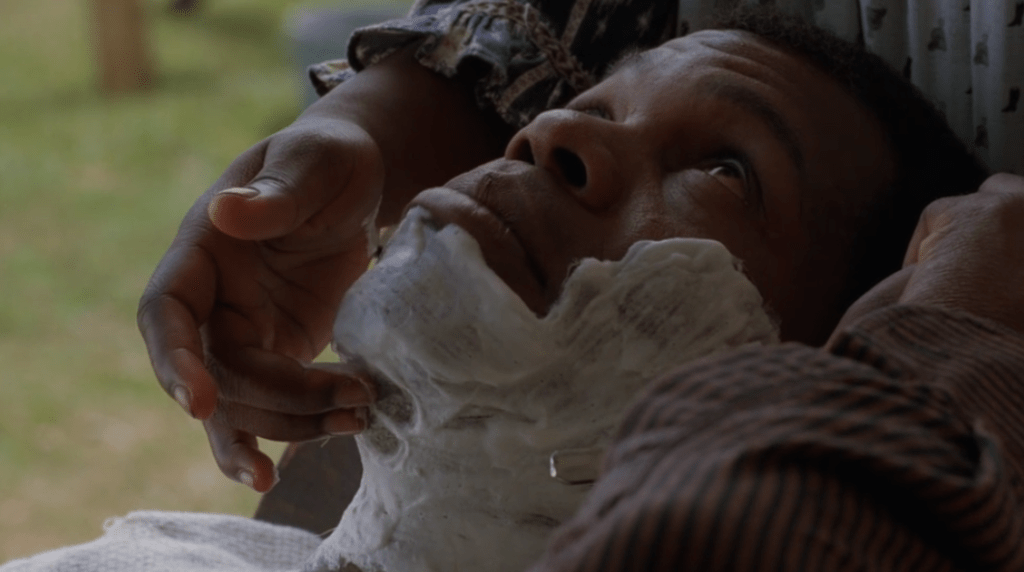
He literally went from smiling to murder in a millisecond.
I think I might need some Depends when he’s on screen.
It’s through years of living with Mister that Celie eventually grows up (now played by Whoopi Goldberg).
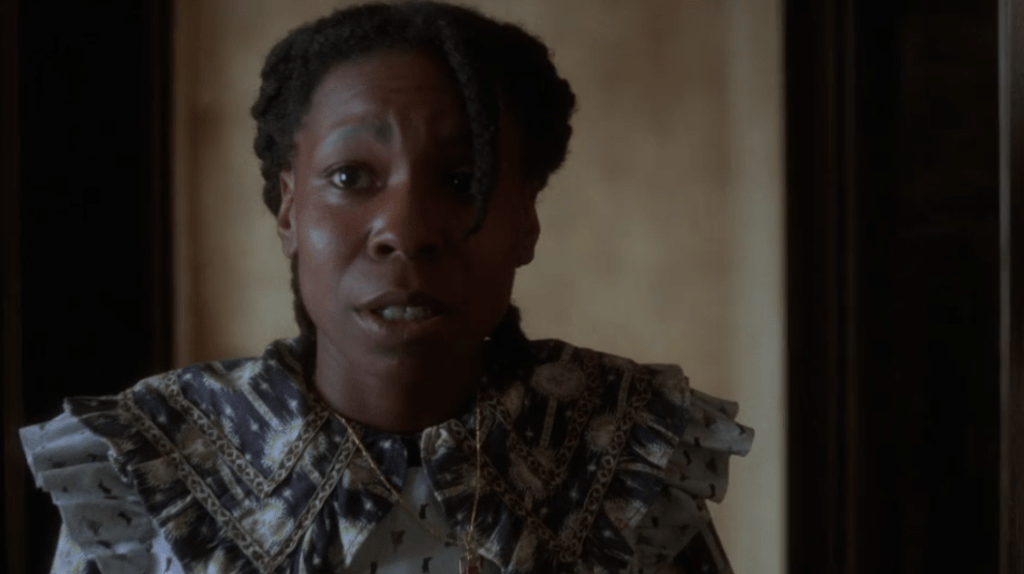
At this point, she’s a far cry from the young girl full of potential Jackson portrayed. While she still has aspirations, they’ve been hidden deep within her due to Mister’s constant abuse. Now, she’s quiet, beaten-down, and subservient to her husband’s every whim. This is how we’ll see her for the majority of the movie. Although, it’s not all bad. Things start to lighten up a bit when Sofia is introduced (played by the Oprah Winfrey).

Like I said in the intro, this was Oprah’s first movie role. So this is Oprah before she was “Oprah Oprah.”
…
I like saying “Oprah.”
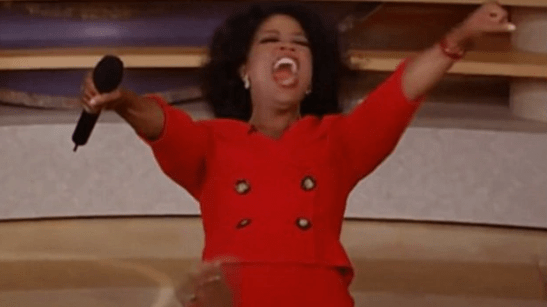
Sofia serves as a pseudo comic-relief. She’s not put in the story just to be funny, she serves other dramatic purposes as well. Although, out of every character, she’s the most outwardly comedic. Sofia is the girlfriend, and future wife, of Mister’s son Harpo (played by Willard Pugh). Sofia is a spunky, no-nonsense, and take-charge kind of gal. She and Harpo have a cute relationship. Until they don’t, thanks to Celie’s relationship advice.
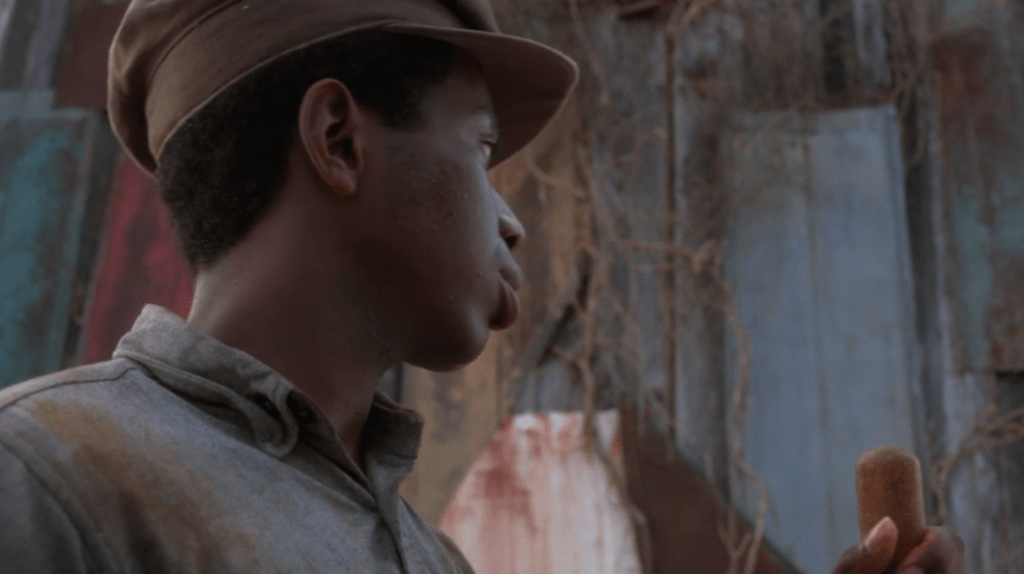

NO, CELIE!
How could you say that?!

That was the reaction I had when I first saw that. It’s built up very well by having a full 9 seconds of silence before Celie responds. They make you think Celie will show sympathy for Sofia considering what she’s been through. Unfortunately, it’s quite the opposite. While it’s initially hard to understand, it shows very clearly how Mister’s harsh nature is rubbing off on her. Also, the movie wastes no time showing us the consequences of Celie’s actions.
Immediately after this scene, we see this.

Yeah, Celie, you got some ‘splainin’ to do.
They also cut back and forth between Sofia giving Celie a piece of her mind and Harpo trying to explain away his injuries to his father. It helps cut some of the tension while also confirming how strong Sofia is. Also, it’s pretty funny.
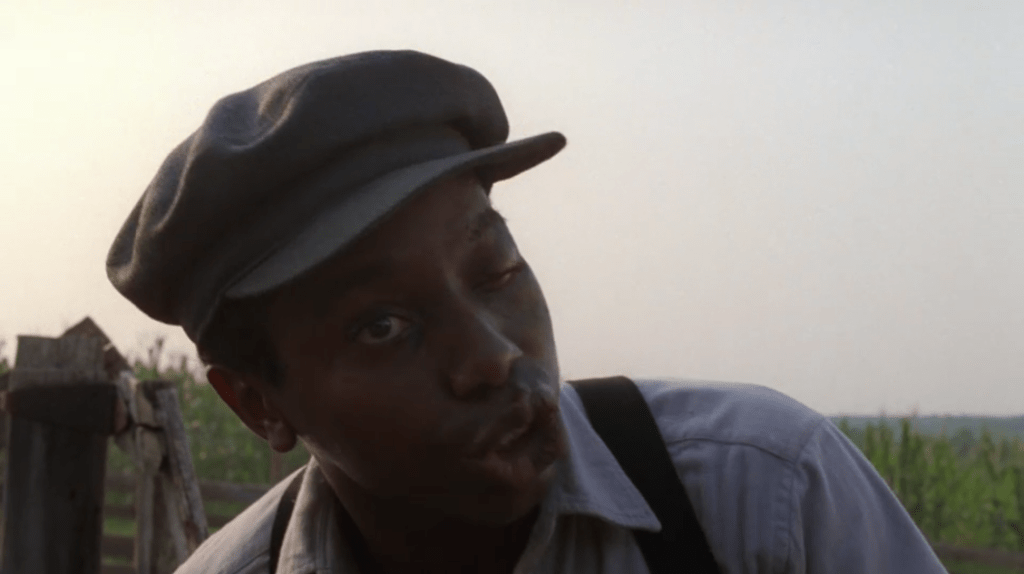
Yeah, Sofia’s got hands.
The last major character we’re introduced to is Shug Avery (played by Margaret Avery) who’s a singer from Memphis, Tennessee. To be honest, I think Shug is my favorite character. Not only is she layered like everyone else, but she has a great voice and plenty of songs to sing.
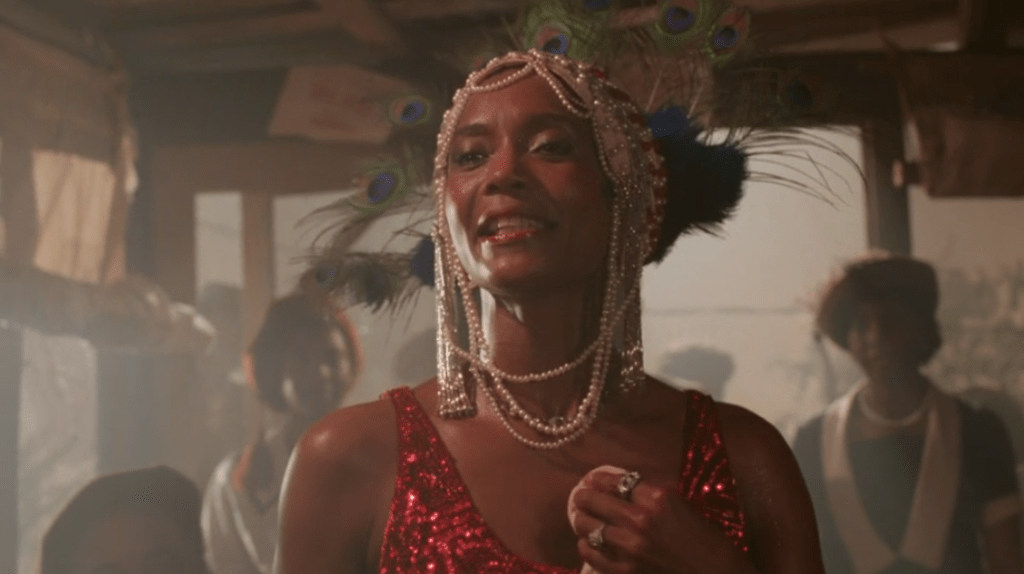
Her arc about reconnecting with her estranged father also comes together nicely. It’s also the arc I personally relate to the most.

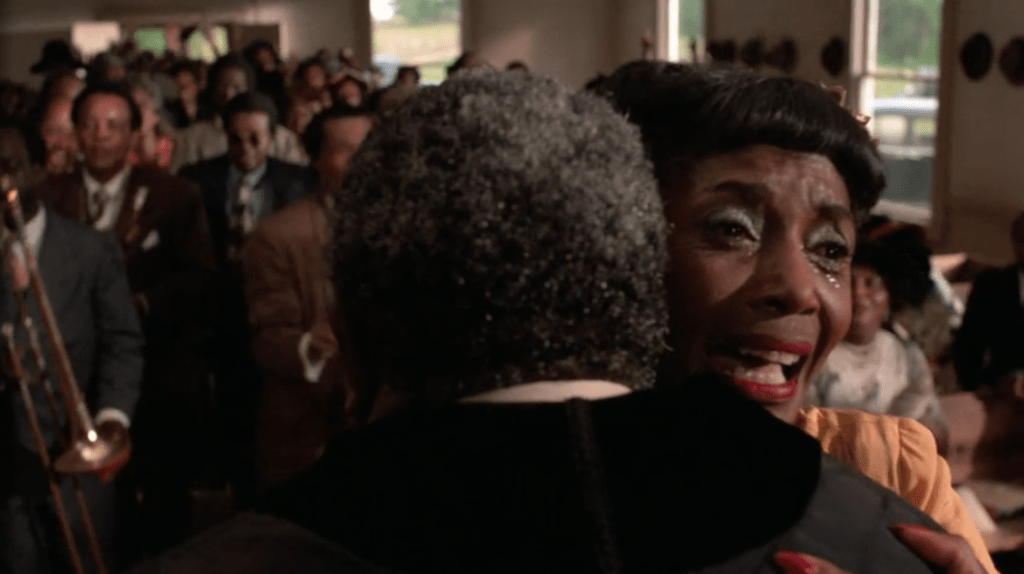
This also speaks to the strongest aspect of the film: the relatability and enjoyable character interactions. Since this film has a “slice-of-life” feel to it, there isn’t much plot. Where the film keeps your interest is with unique characters, their personalities, and how they play off each other. Despite taking place over 100 years ago, these characters are ridiculously genuine and relatable. Likely due to the outstanding cast.
What’s unfortunate about this is I can’t talk about what makes this story great. I mean I can, but I can’t properly get across what makes these scenes work in this format. Most of it is visual which means the best way to get the full effect is to watch the movie.
One thing I can say is that the movie isn’t 100% misery. Celie’s struggles are certainly harrowing, but it interweaves her experiences with the experiences of others around her. For example, Harpo and Sofia eventually get married.
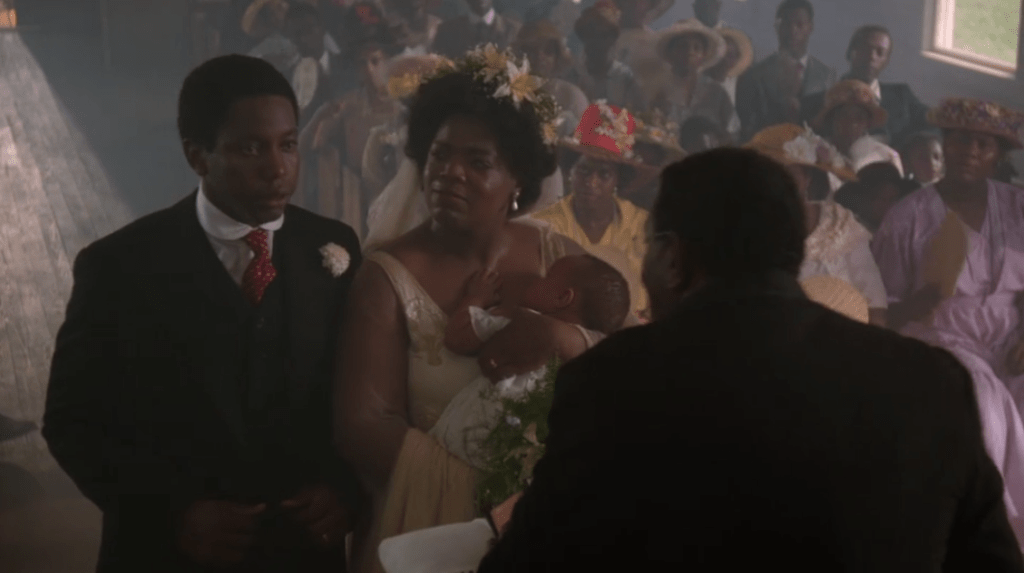
But, due to Celie’s advice, they get divorced.

Despite only being married for 6 minutes of screen-time, you really want to see them work out. Mostly because Harpo and Sofia are perfect foils of each other. Harpo is soft-spoken and easily manipulated, while Sofia is strong-willed and confident. It’s partially because, by now, we’ve seen the influence Mister has had on Harpo through his parenting.

He’s still making that face.
All involved should be afraid.
Also, Sofia and Harpo have a genuinely charming relationship.

It’s clear just in this shot that Harpo is attracted to Sofia’s assertive nature.
Look at the way he’s smiling at her.
It’s possible that Harpo was drawn to Sofia because she made him feel strong. With her by his side, he can finally stand up to his dad. We also find out that Sofia struggled a lot to get to this point. When she’s chewing Celie out later, she says how she grew up in a mostly male household.
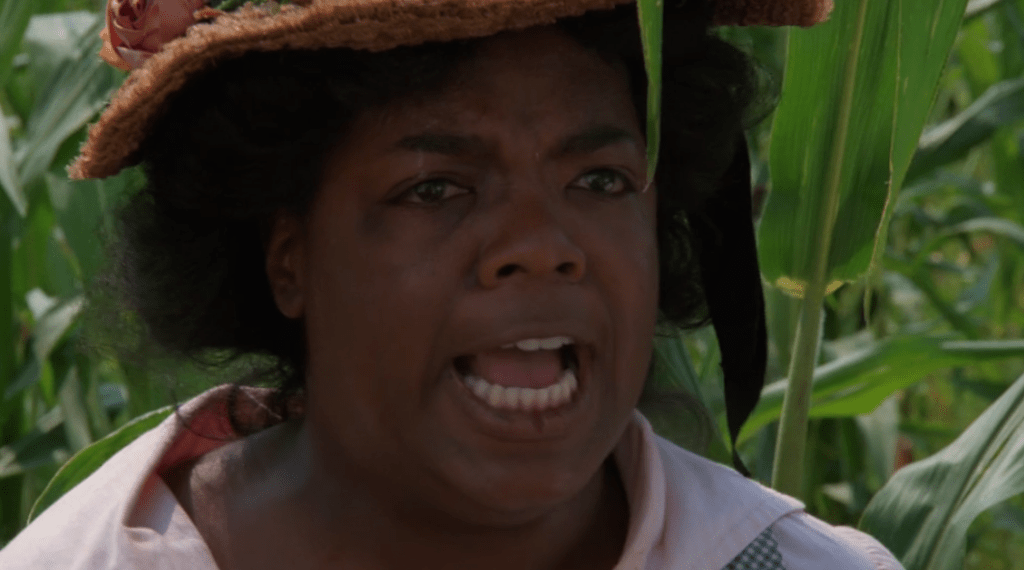
It’s also possible that this is why Sofia is attracted to Harpo. Since he’s the first man she’s met who’s kind and understanding, she wants to spend her life with him. Only after he violates this notion by beating her does she decide to split away from him.
Later on, Sofia is raising her children as a single mother. After a kerfuffle with some White folks, she ends up in jail. For 8 years.
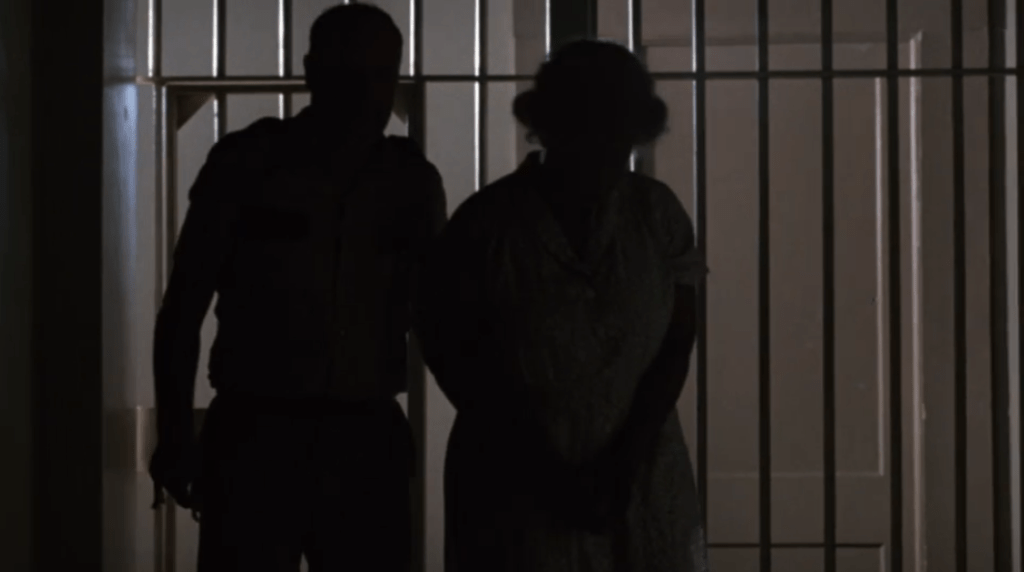
Both Harpo and Sofia pop up in the story from time to time and we’ll see how they’re doing. Since we see them often enough and understand their personalities, moments like this hit a lot harder. We even notice that their flame is still burning by how they interact.


After being put in jail for years, Sofia loses her spunk and much of what makes her unique. It’s downright depressing to watch (along with the Celie stuff).

She’s a shell of her former self.
In the meantime, Celie manages to get through her ordeal with Mister with the help of Shug. They don’t get along at first –


– but they eventually warm up to each other and become close friends.

Now’s probably a good time to mention, the novel touched on significantly more LGBTQ+ themes than the movie. The most we get here is this scene of Shug and Celie sharing a kiss. It shows some significant drawbacks to commentary at the time. Back then, you weren’t allowed to talk about more than one minority group in the same context. Because of this, the movie doesn’t get into every theme the book presented which is a big disadvantage.
Even though what’s onscreen is portrayed well, the film unfortunately can’t reach its full potential.
But, how does Shug help Celie? Shug uncovers letters that Nettie had been sending to Celie from Africa over several years. Since Nettie didn’t submit to Mister’s advances –
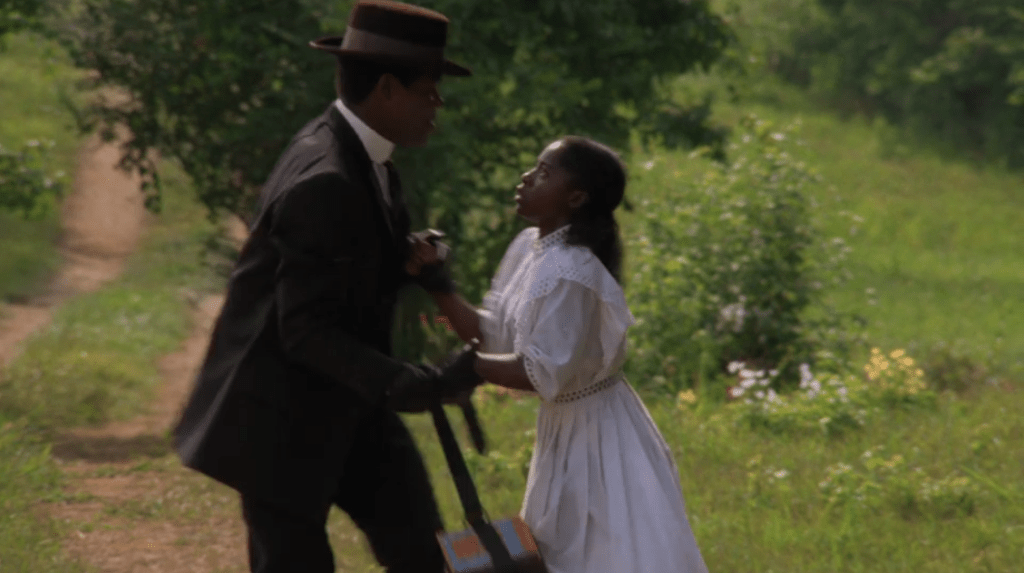

Notice the crushed purple flowers.
– he kicks her off his property.

Celie doesn’t see or hear from Nettie for years due to Mister blocking access to the mailbox. It’s only after Shug recovers one of Nettie’s letters that she finds out Nettie has been writing all this time.
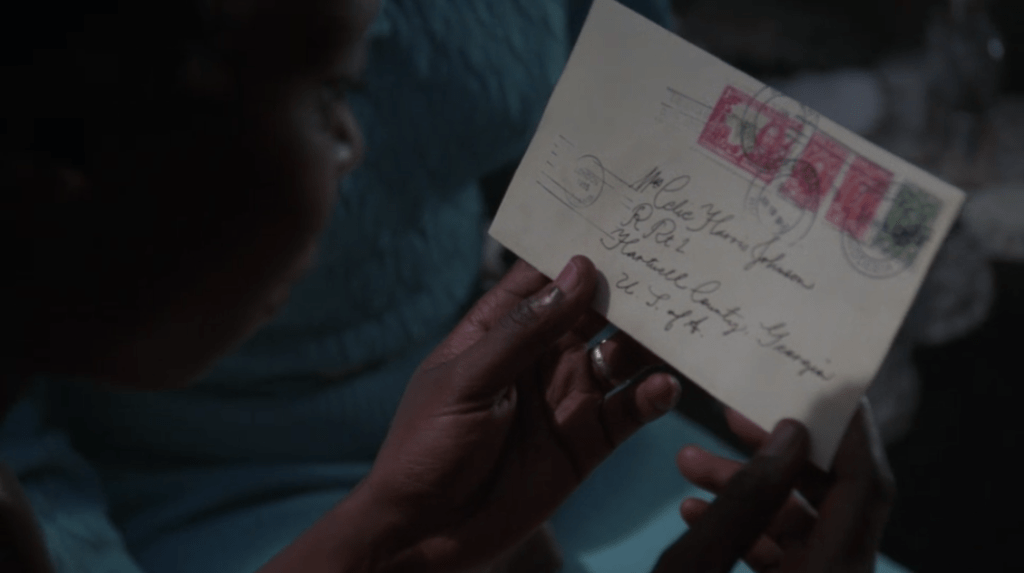
It’s also Shug that uncovers the treasure trove of letters Mister has stashed away all this time.
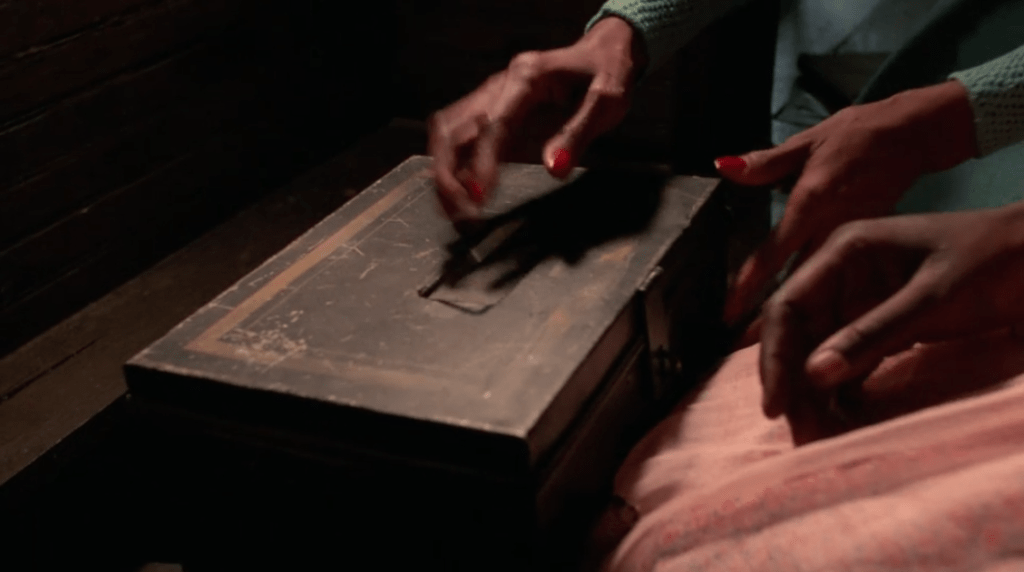

That, and Shug let’s Celie in on Mister’s biggest secret.
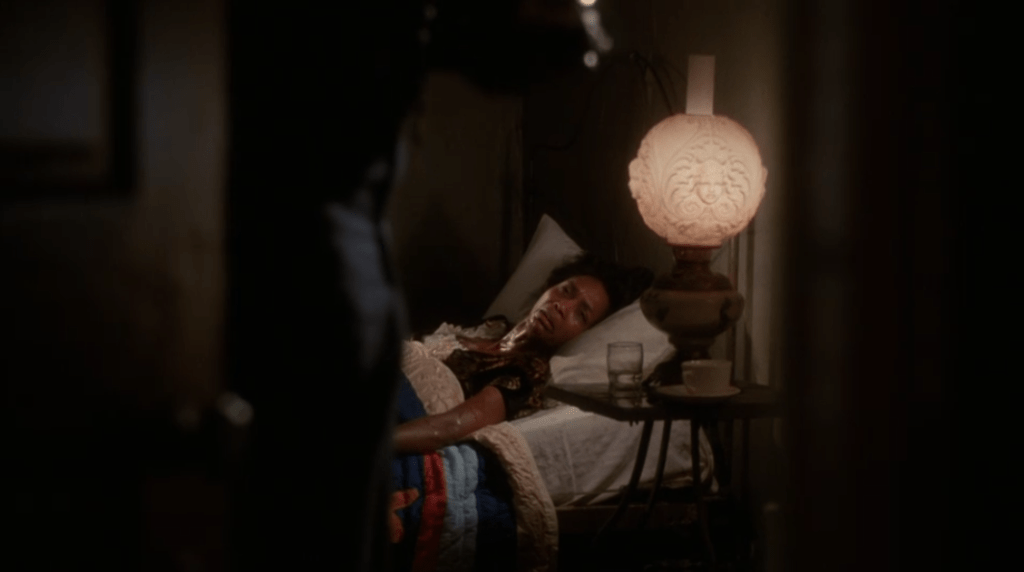

Yes, you heard that correctly.
Mister’s name is “Albert.”
It’s the friendship between these two that slowly inspires Celie to take control of her life. It all culminates in this climactic dinner scene.

It’s also Shug that takes Celie with her to Memphis after she reduces Albert to a desperate teenage incel.

Dude, accept defeat.
Oh yeah, and where does the title of this story come from, anyway? As it turns out, Shug is the one who explains it to us.


That’s essentially the thesis for this story.
You could argue that Celie is the color purple. Much like everything else, she just wants to be loved, accepted, and acknowledged. How do I know that’s what the story is implying? Because whenever Nettie is on screen, she’s usually accompanied by the color purple. Nettie is also the only character that’s always loved and appreciated Celie.



What I like the most after Celie leaves Albert is what happens to him as a result. Of course, there’s still the appropriate amount of karma you’d expect given his past actions.
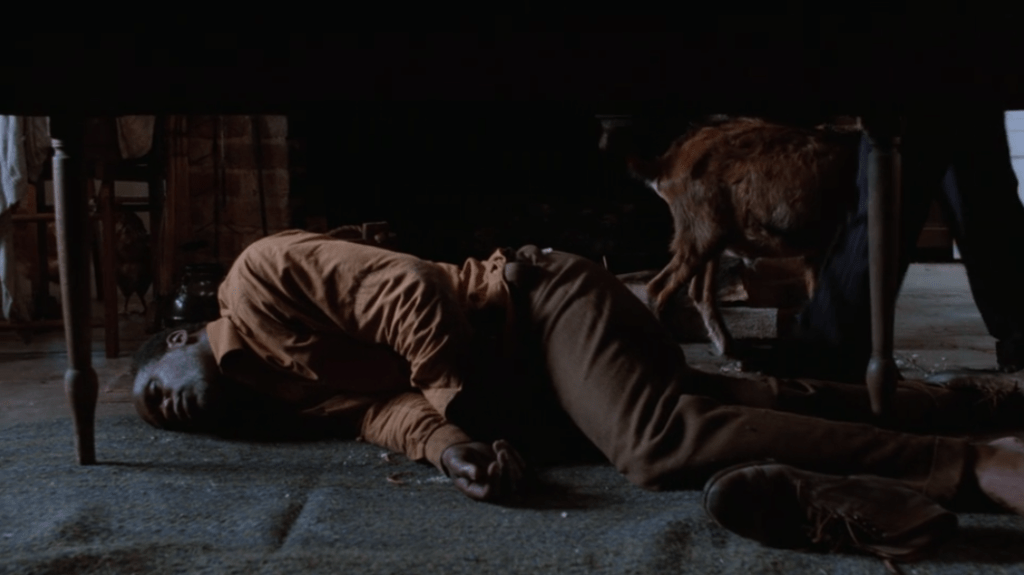
It’s also interesting to see that “curse” Celie put on him is more real than you originally though.
This actually isn’t the main thing I like about this. What we see is Albert at his lowest so he gains clarity and reflects on who he is. He doesn’t remain a bitter abusive man, he changes and even sponsors Nettie’s immigration back to the U.S. It feels all the more real when we see him repay his debts to Celie without saying a word.

After Celie leaves, she doesn’t share a line of dialogue with Albert again. The most powerful shot of the movie to me is the last one. When Nettie and Celie are once again in each other’s arms and Albert walks behind them.

What was once a relationship of hostility and total control has since become one of mutual understanding and respect.
You don’t need words.
You don’t even need an expression.
Allowing them to pass by each other in that fashion without acknowledging each other is acceptance enough.
With that, I know this review was all over the place, but I hope I gave you an idea of what this movie’s about. Again, I have to encourage you to watch the film for yourself. Given the material and focus, it’s the best way to experience it. If there’s anything more you’d like to discuss about this movie, feel free to drop us a comment. Although, let’s sum up my thoughts real quick.
After watching this film several times now, I still enjoy it. In fact, I probably enjoy it more than I did when I saw it the first time. To that same end, I acknowledge that this movie isn’t perfect.
Of course I already mentioned the LGBTQ+ themes that weren’t addressed, but there’s certainly more. As someone who hasn’t read the novel, and doesn’t have access to it, it’s hard to tell for sure. Although, for a Pulitzer Prize winning novel, this film only partially represents that. Considering the accolades the original text has received, the film adaptation is good. I wouldn’t call it “outstanding” or “amazing,” because
There is also one criticism that’s worth mentioning: the negative perception of Black men. This was the case with both the original novel and the film, but I personally disagree. For me, the intention wasn’t to paint all Black men as abusive or controlling. It just so happens that this story mainly focuses on a Black man who does those things. Even then, I’d argue Albert’s character is more complex than people give credit for.
Like I mentioned for Beauty and the Beast: I don’t agree with this person’s actions, but I understand why they do them. As a Black landowner himself, Albert has to put up a tough front to survive. Especially as a Black landowner in the early 1900s, Albert’s life surely wasn’t easy. It’s the threat of eviction, violence, and death from the White community that’s made him who he is. If he wasn’t a strong man, it’s possible he would’ve ended up like Harpo.
Similar to what Sofia described in the film, Albert is forced into a box as well. Whether he wanted it or not, that’s the way he lives because he knows what’ll happen if he doesn’t. You could even say the same for Pa Harris (Celie’s non-biological father). On top of that, there are plenty of level-headed and kind Black men in this story as well. People only point out the male-bashing because the most prominent character is an abusive Black man.
While I defend the story on that front, I can’t say this film is fantastic. There’s a clear dedication to storytelling on screen and an appreciation for the material, but it comes at a price. Since there was a big stink when the novel was released, it feels like this movie is a “softer” version. One that appeals more to White people’s understanding of inequality than the true reality of it.
I still recommend the film for its outstanding performances, great tone-building, and dedication to storytelling. However, if you’re looking for the original intention behind the story, the novel is the way to go.
Despite the few issues I have with this movie, I feel like it’s earned a 4/5 purples. For the most part, what’s portrayed on screen is very compelling. Goldberg as Celie, Glover as Albert, Winfrey as Sofia, and Avery as Shug are remarkable. The cinematography and editing help convey subtle symbols and emotions. Just remember that what’s here isn’t the full story. Unfortunately I can’t rate it much higher, but it has earned at least that much for its efforts.

(I make no claim of ownership for any of the images used in this post)
(Each of them are owned entirely by their respective copyright holders, which are not me)
(I’m just a humble blogger who talks about movies, I do not make them)
(Yet)
 TGIMovies
Leave a comment