
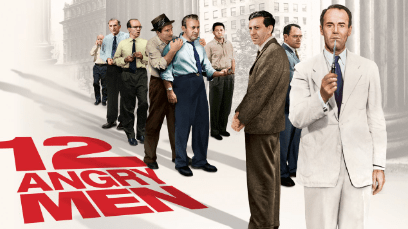
This is one of my favorite movies. I’m not even joking when I say that. To me, it’s still one of the most thought-provoking, poignant, and gripping films I’ve ever seen in my life. Believe me, I’ve also seen it countless times. Enough to the point I can recite it from memory. Heck, this movie could play on repeat for the rest of my life and I’d never get tired of it. Although, you probably get the point by now.
This also isn’t to mention that 12 Angry Men is another Criterion Collection inductee. Given that I’ve gushed about movies like Pan’s Labyrinth and Suna no Onna, y’all know how much I love the Criterion Collection. I’m so glad we have an organized group of people that care about art preservation this much. In certain cases (like Suna no Onna) it can also mean the difference between a film being a highly regarded masterpiece or a forgotten one.
While that isn’t the case as much with a movie like 12 Angry Men, it’s still important we remember it. Every single detail in this movie was carefully laid out to give us an unforgettable courtroom drama. That, and this is the quintessential courtroom drama that paved the way for several other courtroom dramas in the future. Although, what is it that makes this movie so great? Oh, I can’t wait to get started. 😉
If you’re ready, let’s retire to the jury room and go over the facts in 12 Angry Men.
To start off, I’d like to say something real quick. While I adore this movie, I also understand that the courtroom processes it presents are outdated. Nowadays, it’s less likely that a case will be handled in a manner such as this one. Although, part of recognizing art’s power is to understand what it means in its original context. So, for those who’re confused by the hyper-fixation on the jury, I hope this clears things up.
With that being said, what’s this movie about? It’s actually quite simple. A poor boy’s father was murdered, and said boy is suspected of being the killer. What we see in the film takes place after the trial has concluded. The jury has heard the facts (or bull-crap) of the case and is deciding the boy’s fate. If “Guilty,” he’ll be sent to the electric chair. If “Not Guilty,” he’ll be let go. This is an incredible responsibility for our jurors.
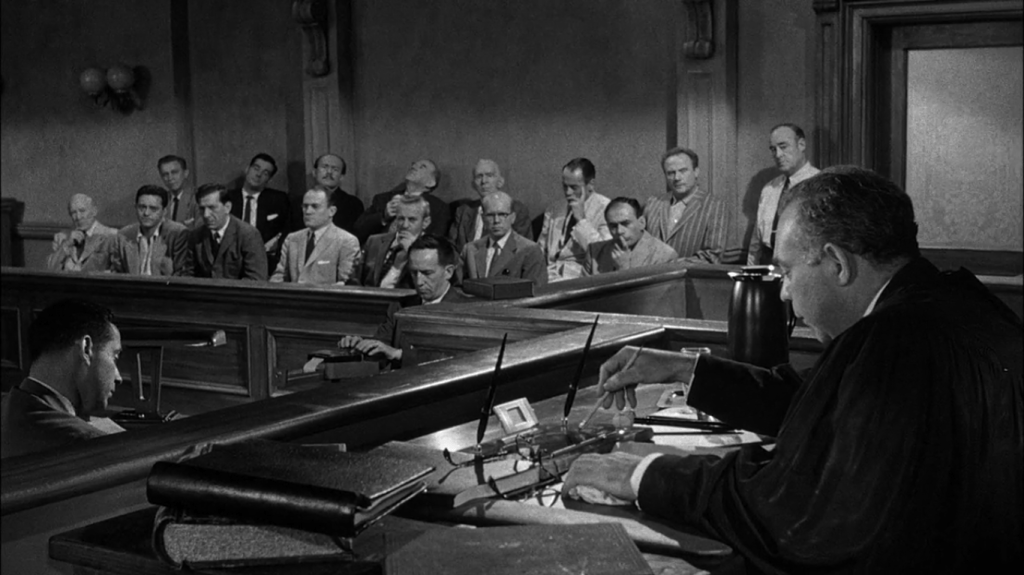
To help drive this responsibility home, they give us this one and only shot of “The Accused.”

This is essentially the filmmakers telling us what’s at stake. Here we have our boy who’s on trial for murder. Do you think he’s Guilty or Not Guilty just from this expression alone? It sticks with us even more as his face fades into a shot of the jury room. This is also where we spend the majority of the movie.

That’s essentially the whole film. But why do I like it so much? Well, let’s start with the characters. One thing you’ll notice early on is that none of them have names. I mean, they probably do, but we’re never told what their names are. Despite this roadblock, they still have distinct personalities. All of them. Even with a movie with 12 main characters, they all come across as fleshed out characters with unique backstories. Let’s break it down by jury number.
The first is Juror #1, or “The Foreman” (played by Martin Balsam).
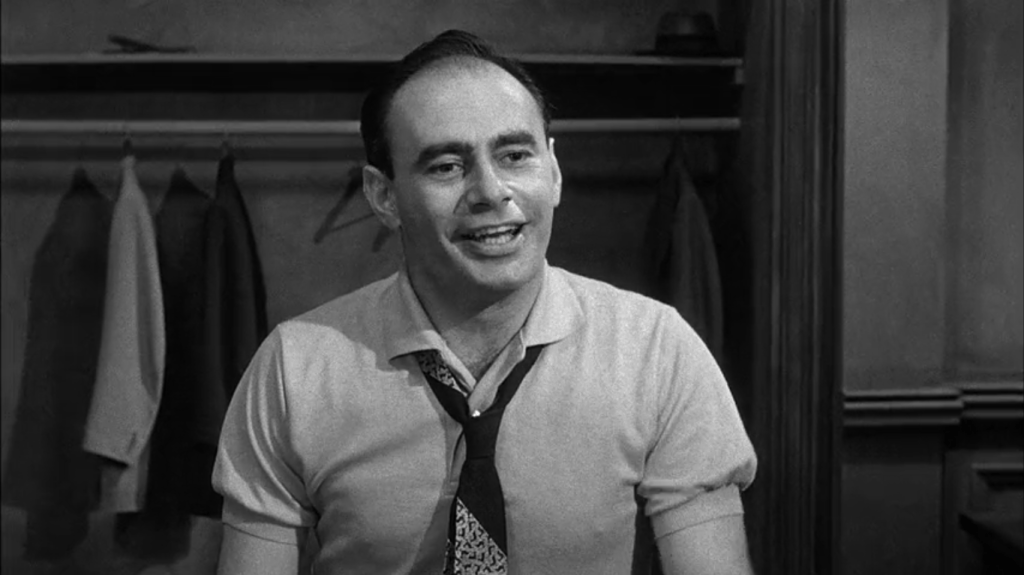
While not the focus, he represents the organization and efficiency that the justice system prioritizes. He takes charge and tends to vote with the majority to keep things moving. It’s clear from his demeanor that he’s sat on multiple juries and knows how this works by now. Or, at least, how this should work. Despite his flaws, I still kinda like him. His can-do attitude makes him easy for me to identify with and root for even if we don’t always agree.
Also, after seeing this movie so many times, I’ve given these folks nicknames of my own. Either based on occupation, personality traits, dialogue, or a combination of the three. You’ll see what I mean with the next juror.
After The Foreman comes Juror #2, whom I like to call “The Noob” (played by John Fiedler).
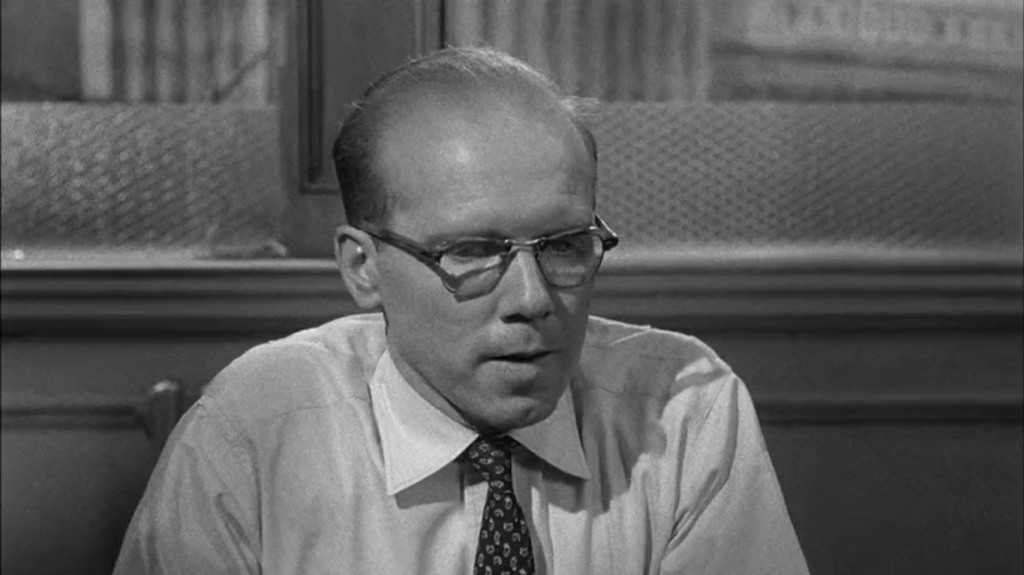
When I call him “The Noob,” I don’t do it to insult him. What I mean when I call him that is this trial is his first time sitting on a jury. To some degree that makes him more fresh-faced and unbiased than some. Although, due to his lack of experience, he can also be easily swayed by those around him. He’s quick to listen to the opinions of others, but tends not to value his own. In fact, if I were to sit on a jury, I feel like I’d be a lot like him.
Juror #3 is up next, whom I refer to as “The Avenger” (played by Lee J. Cobb).

This man is as hard-headed as they come, and clearly has a lot on his mind. Whether that pertains to the case or his personal life is for the audience to decide. Not only is he the most aggressive of any juror, he also bullies others into agreeing with him. He has some awfully strong feelings about this case and he makes it known to everyone in the room. Whether by verbal or by physical means. Definitely someone I wouldn’t want to be friends with.
After him is Juror #4, or “The Broker” as I like to call him (played by E. G. Marshall). Also, he’s personally my least favorite character in the movie.
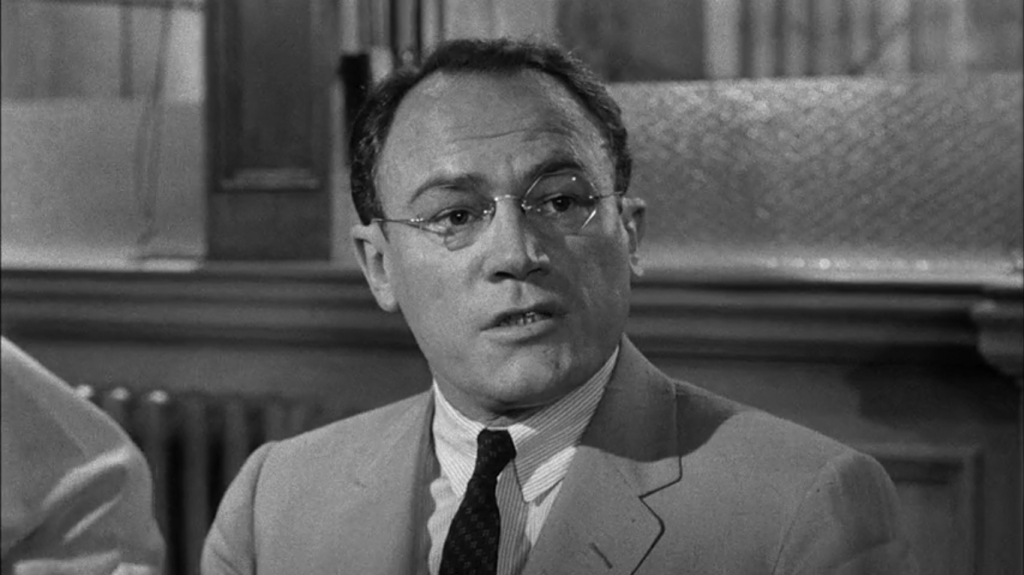
The main reason I don’t like him is because of his attitude. From minute one, he acts like he’s the smartest in the room and that no one else’s opinion matters. He’s so up his own ass he goes through evidence as if he were the primary detective on the case. Every time I watch this movie, it’s so satisfying to eventually see him get put in his place. I’d say the movie is worth watching just for that.
Then we have Juror #5, or “Baltimore” based on a conversation he has with Juror #7 (played by Jack Klugman).
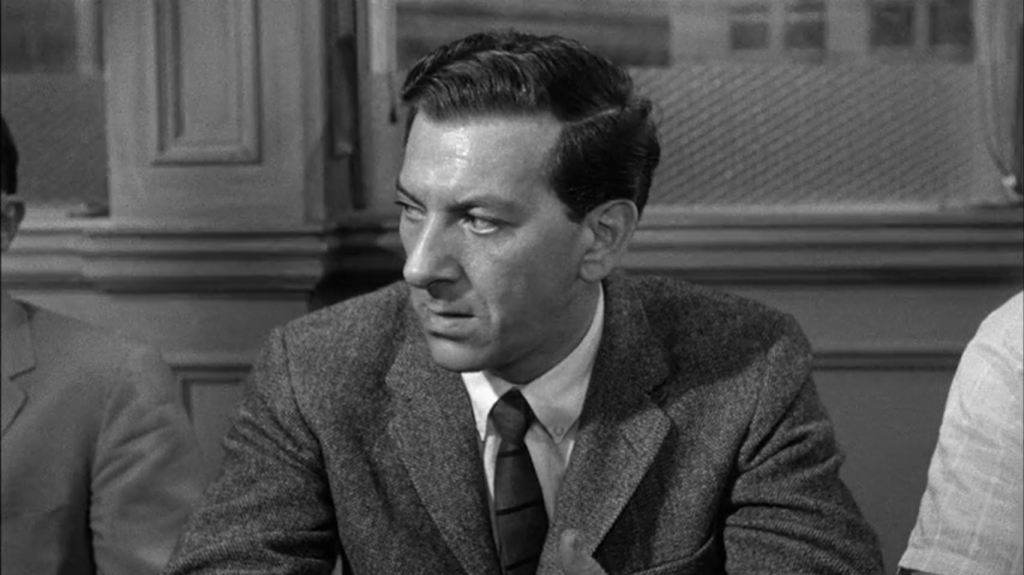
The clearest thing about his character is his backstory that’s touched on later. We eventually find out that he was raised by a poor family in a poor neighborhood. Because of this, he gives the jury insight into the slums which helps give an alternate perspective on the case. He also seems ashamed of his past and goes to great lengths to hide it. This acts as a commentary on the United States’ attitude towards people of lower socioeconomic status.
After that we have Juror #6 whom I call “The Blue Collar” (played by Edward Binns).

Besides Baltimore whom we already discussed, The Blue Collar is (naturally) a working man. It’s obvious he’s much more comfortable as a follower than a leader by the way he votes. He’s used to taking orders, so he follows the group. He doesn’t have many lines in the movie, but I don’t mind. Mostly because it’s meant to represent how, as a subordinate, he often doesn’t publicly speak his mind. Also, he has respect for those with experience.
Still with me? Don’t worry, we’re halfway through. At the #7 spot, we have the character I call “The Joker” (played by Jack Warden). He’s easily the most morally bankrupt person in the film.
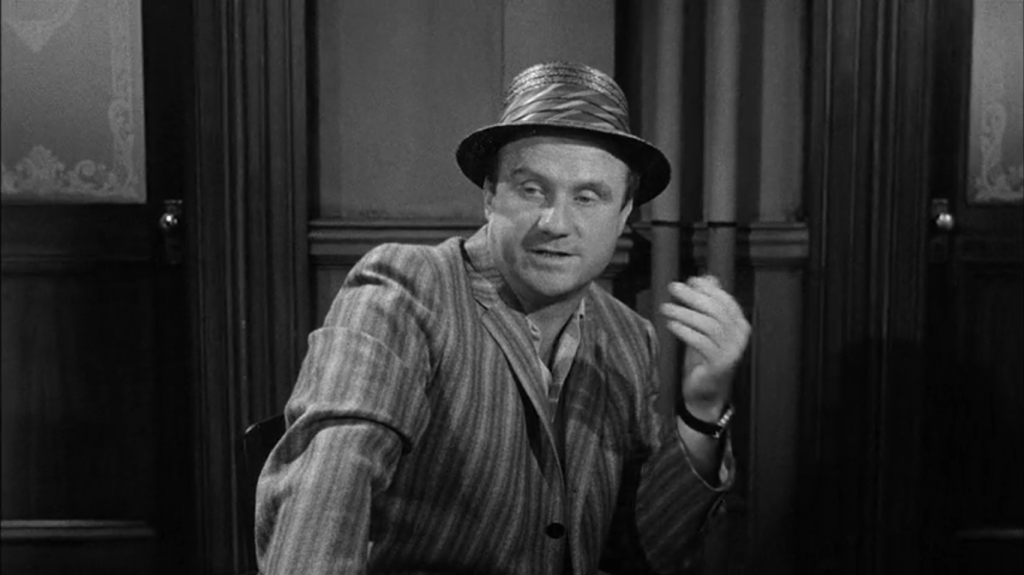
The only thing this guy cares about is baseball. Nothing else. Even at the expense of human life. You can see why he’s easy to dislike. Throughout the whole movie he only ever votes with the majority. Why? Because he has a baseball game to get to. All he wants is to get out of this room as soon as possible. He never paid attention during the trial, he only pays attention to the game score. What a douche.
Then we have our protagonist. The character that gets the most focus is Juror #8. I call him “The Samaritan” (played by Henry Fonda).
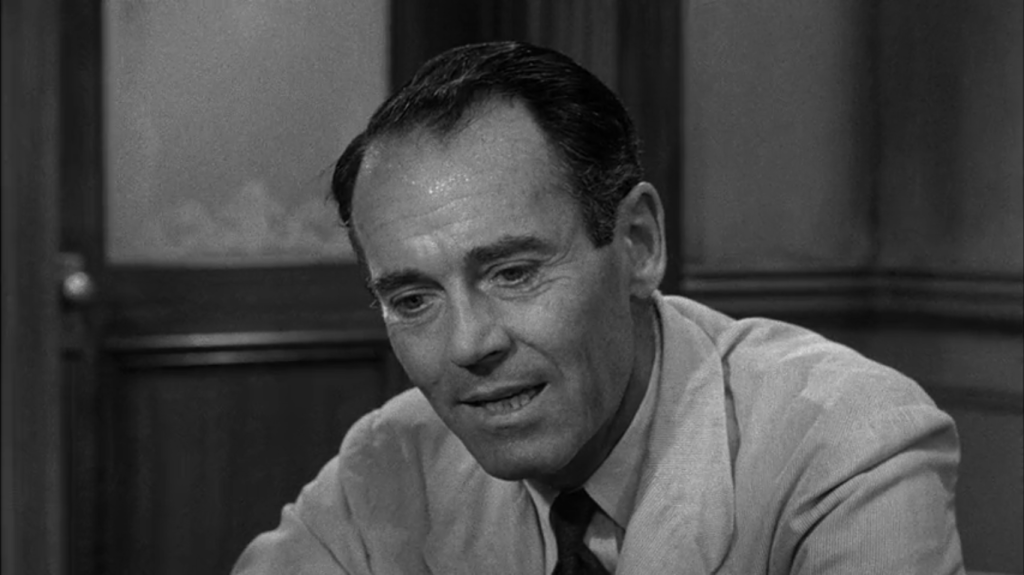
He’s the first juror to vote Not Guilty and spends the entire rest of the movie trying to convince everyone. While it’s unclear why he thinks the way he does, it’s obvious he’s a critical thinker. Only later do we learn he’s an architect by trade and a father of 3. There’s possibly an explanation hidden in those clues as to his reasoning for doing this, but it’s mostly speculation. All we know is that, regardless of his reasons, he clearly wants to do right by the defendant.
Sitting to his left is Juror #9, or “The Sage” as I call him (played by Joseph Sweeney).

The Sage is a very unique juror due to him being the oldest. As an elder, there are several things he realizes about the case that everyone else misses. Not only does he provide one of the most unique perspectives but he’s easily the most likable. While The Samaritan is clearly the “hero” of the movie, The Sage is so respectable, calm, and wise. I actually like The Sage more than The Samaritan. Mostly because his motives are clearer and easier to get behind.
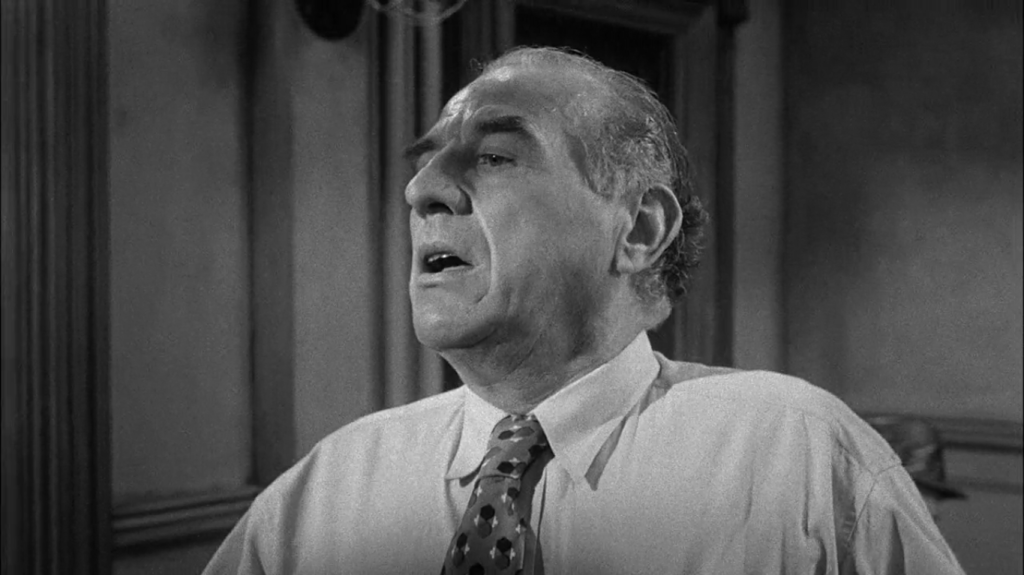
Coming in on the final 3, there’s Juror #10, or “The Bigot” as you’ll soon understand (played by Ed Begley).
 TGIMovies
Leave a comment