

Much better. Sorry, after reviewing American Assassin last week, I had to remind myself what quality cinema was. Also, it gives me the perfect opportunity to talk about Kurosawa. I don’t often have the opportunity to do that, but let’s provide some background for the uninitiated.
This film was made by the legendary film-maker: Akira Kurosawa. He’s a film-making giant in Japan responsible for several classic films such as The Hidden Fortress and Seven Samurai. I would’ve preferred to cover one of his well-known films (like Seven Samurai), but I don’t have that much time. One day, I would like to cover those films, but Rashōmon isn’t a bad alternative. In fact, it was revolutionary in its own way.
This was the first movie in history to depict the same story through multiple character perspectives. It was based on short stories published by Ryūnosuke Akutagawa. To be specific, based on two short stories: “In a Bamboo Grove” and, naturally, “Rashōmon.” Rashōmon (movie) primarily borrows from “In a Bamboo Grove,” but it combines elements from “Rashōmon” to make it distinct.
After watching it for the first time, my favorite element was the vast differences between each perspective. It helps depict how inaccurate human memory can be and how easily it can be altered by personal experiences. That, and how people bend the truth to make themselves look better or to absolve themselves of wrongdoing. In the end, this movie makes me wonder, “Which of these stories is true?” and “Are any of them true?”
There’s a lot to unpack, so let’s not waste any time.
Gather round the crumbling gate and I’ll tell you the “true” story of Rashōmon.
Before I begin, I just want to take this time to remind y’all that this film is originally in Japanese. For that reason, you may occasionally see images in this post with subtitles on them. I hope that won’t be too distracting. Also, if y’all would like me to do a cut comparison (Subbed vs. Dubbed), feel free to leave a comment.
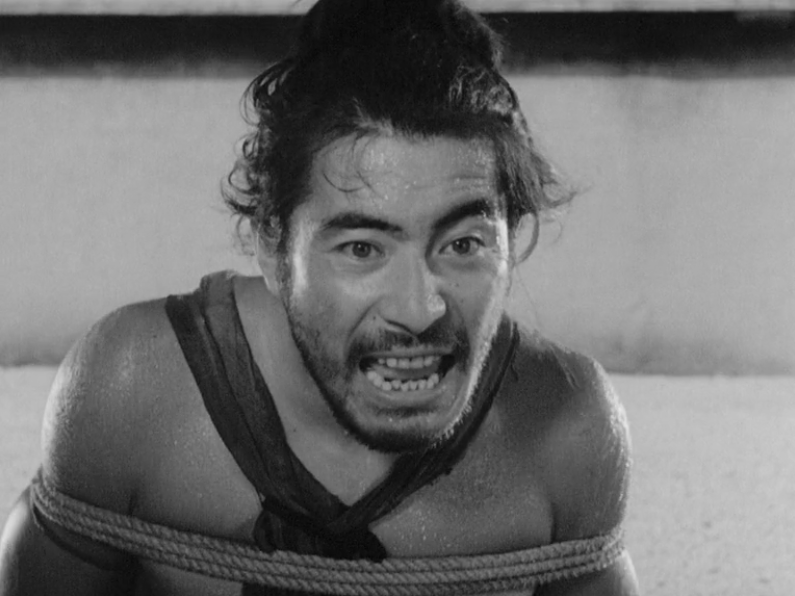
To start off, let’s go over the basics. A man and a woman are walking through a bamboo grove one day. The man is killed while the woman is…violated. So the movie involves piecing the truth together after the fact through various testimonies. Of the people who testify, the first is the supposed perpetrator: Tajōmaru (played by Kurosawa mainstay, Toshirô Mifune).
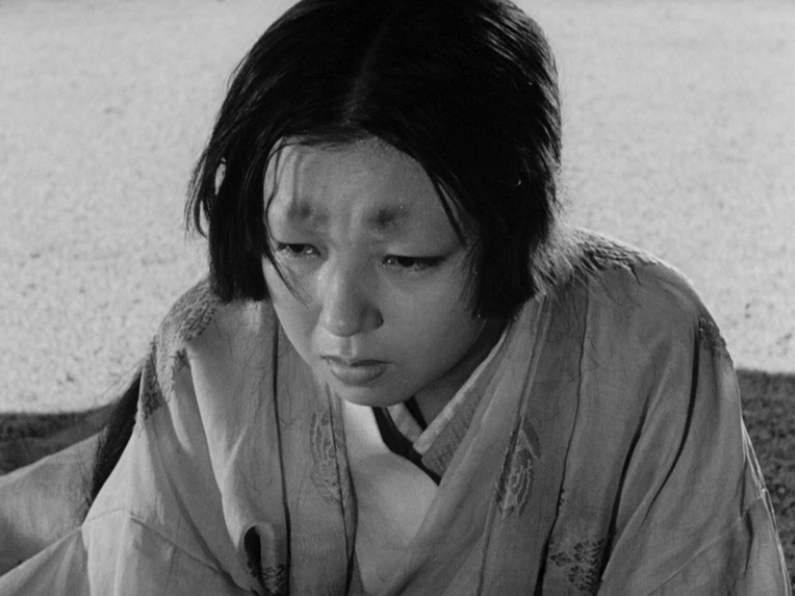
The second is the woman involved, named Masako Kanazawa (played by Machiko Kyô).
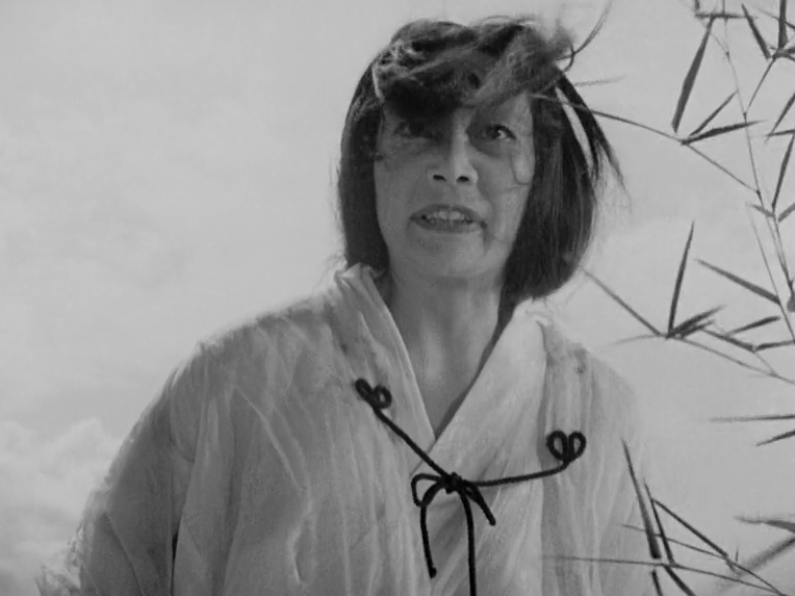
The third is the dead man himself (played by Masayuki Mori).
Wait, what?
Yeah, the dead man “testifies” by having a medium (played by Noriko Honma) channel his spirit.
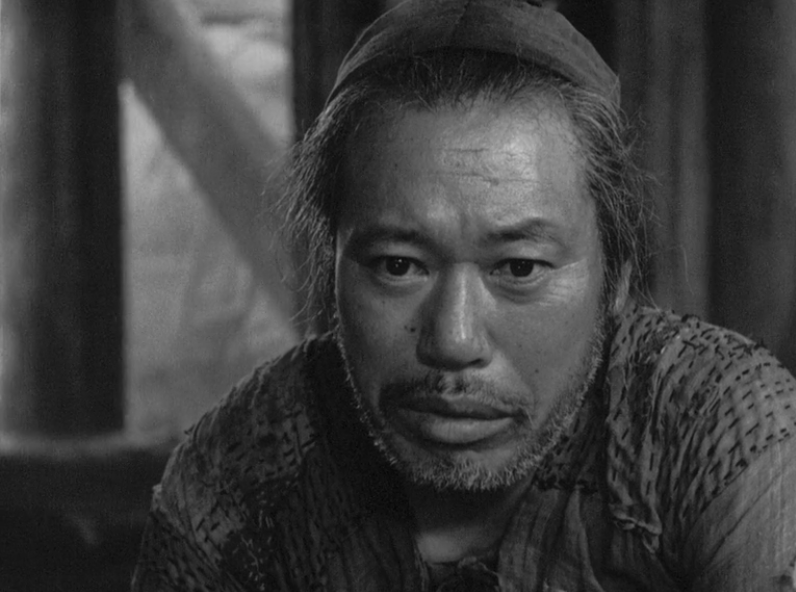
And the fourth perspective comes from a woodcutter (played by Takashi Shimura) who supposedly witnessed the whole thing. Although, he was too afraid to publicly testify, so we only hear his version after the fact.
Oddly enough, the movie doesn’t take place at the trial. Unlike 12 Angry Men, this movie actually discusses the individual perspectives after the trial is over. Three people gather under the decaying Rashōmon during a rain storm and talk about the craziest story they’ve ever heard. First is the woodcutter I already mentioned. Second is the priest (played by Minoru Chiaki) who was present for the trial. And last is a stranger (played by Kichijirô Ueda).
Also unlike 12 Angry Men, Rashōmon takes place in ancient Japan. Shocker. Because of that, there’s less evidence and facts that can be used to shed light on the case. Forensics and investigative police work took a long time to develop. So that means all anyone had to go on at the time were witness testimonies. You can see how personal bias, bad memory, and hidden agendas can cause problems here. That’s what this story is about.
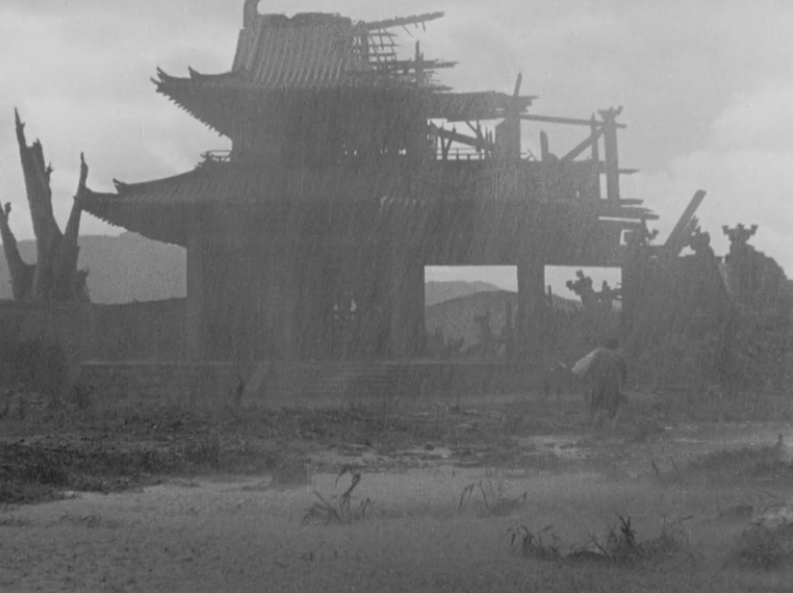
To make this point clearer, the story cuts back to the three men under the rotting gate often. Usually in-between perspectives we’ll get more insight on what’s happening in the present. Also, when discussing traditions falling apart, the most telling thing is a comment the stranger makes to the priest.
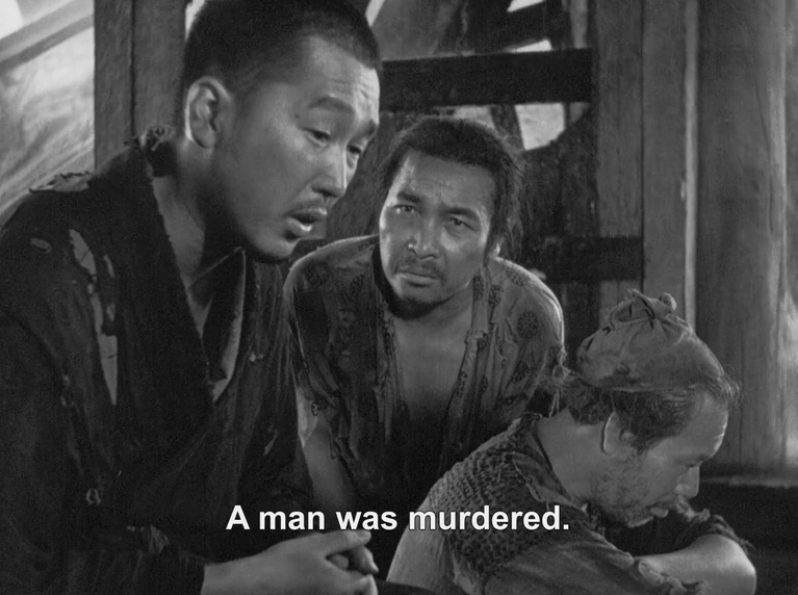
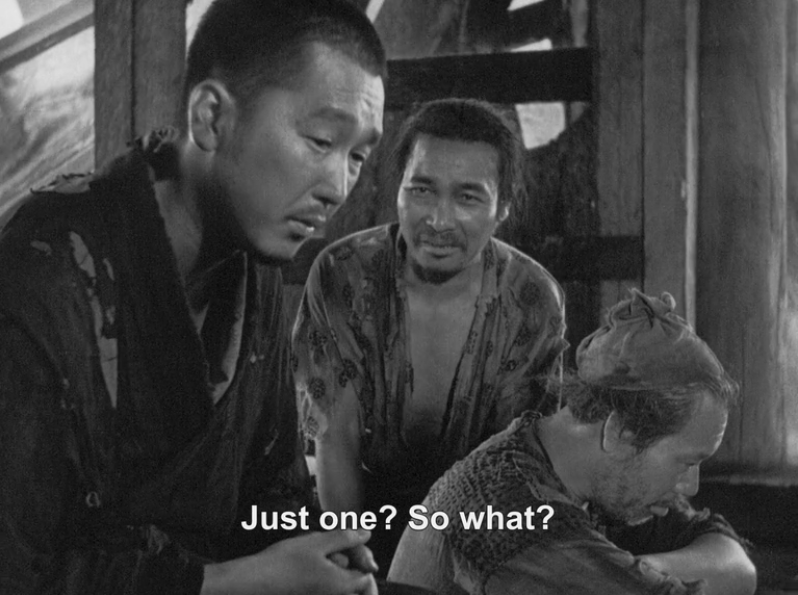
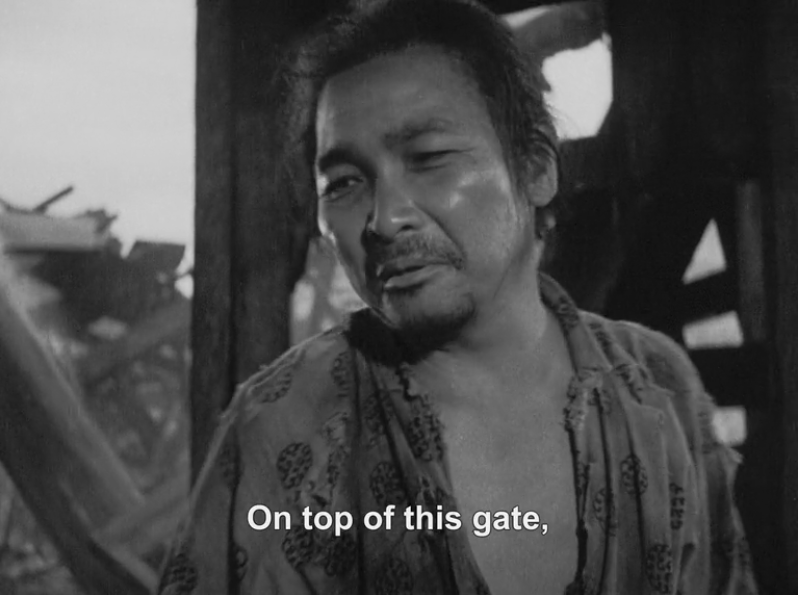
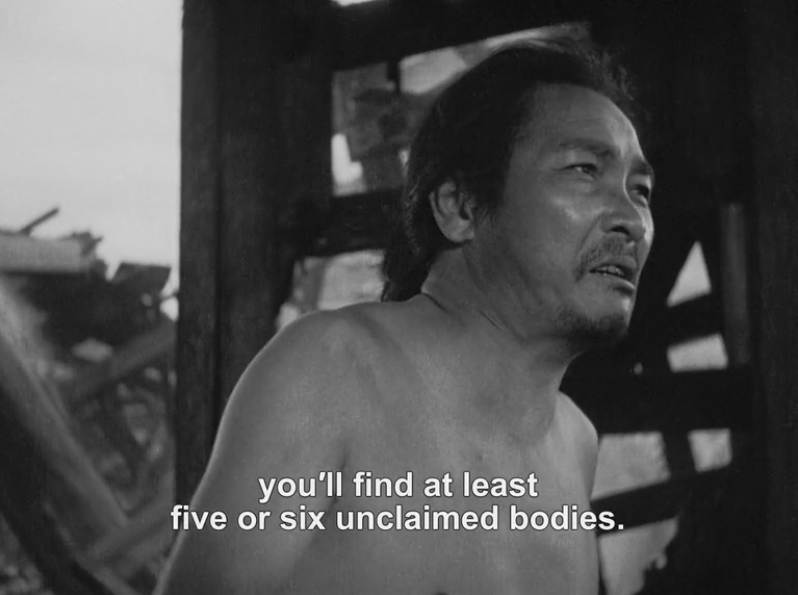
Oftentimes, turning away from tradition is viewed as a descent into anarchy. Even today, that idea is shared by various other cultures, not just Japan. Heck, that concept is strong even in the United States.
Although, there was a story in this movie, yes? Well, there’s technically four stories, but let’s start with the first one. Tajōmaru is easily my favorite character.
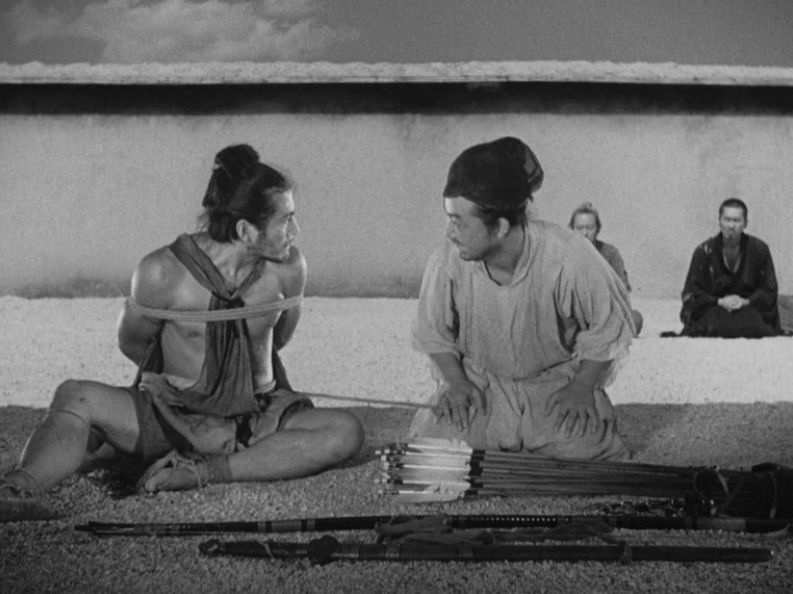
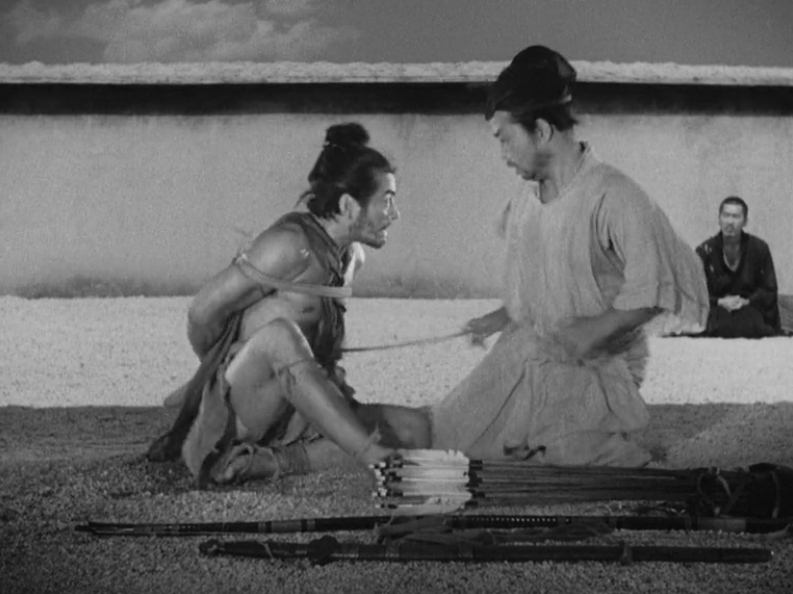
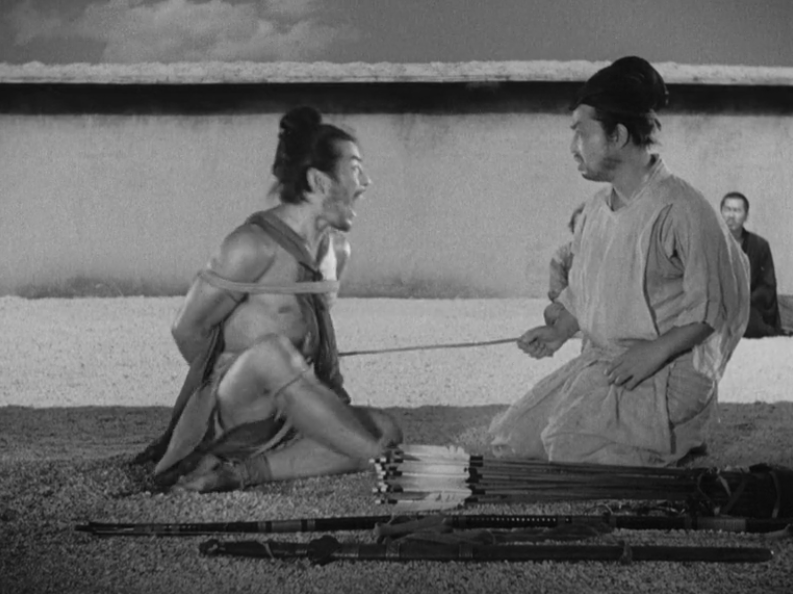
I know we’re not supposed to like him, but Mifune is having so much fun acting crazy it’s contagious
At the same time, Tajōmaru essentially represents (in Freudian terms) “the id.” He’s not motivated by any sophisticated concept of morality. Nah. He does what he wants when he wants. Being motivated by his own primitive desires, you can see why he’s a bandit. He’s so far-removed from reality that he doesn’t even deny his crime. In fact, he confesses! Not because he’s remorseful, but because he doesn’t care.
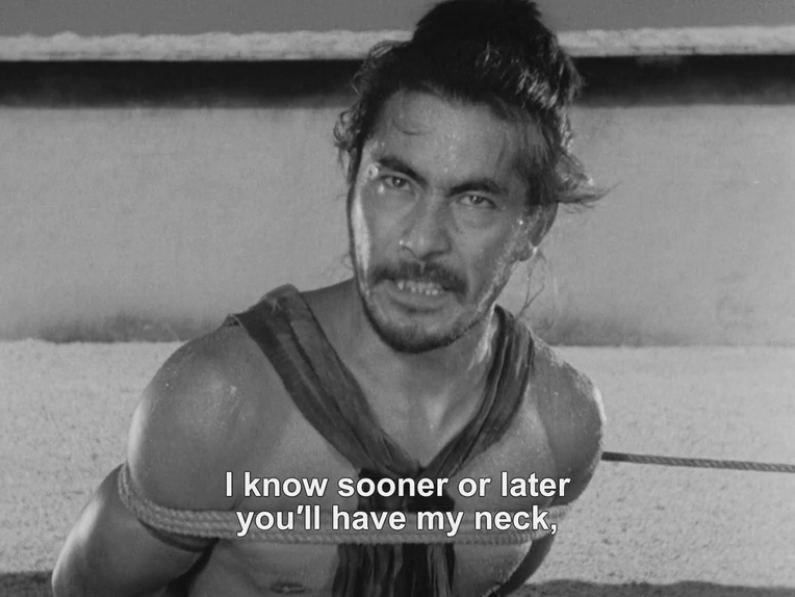
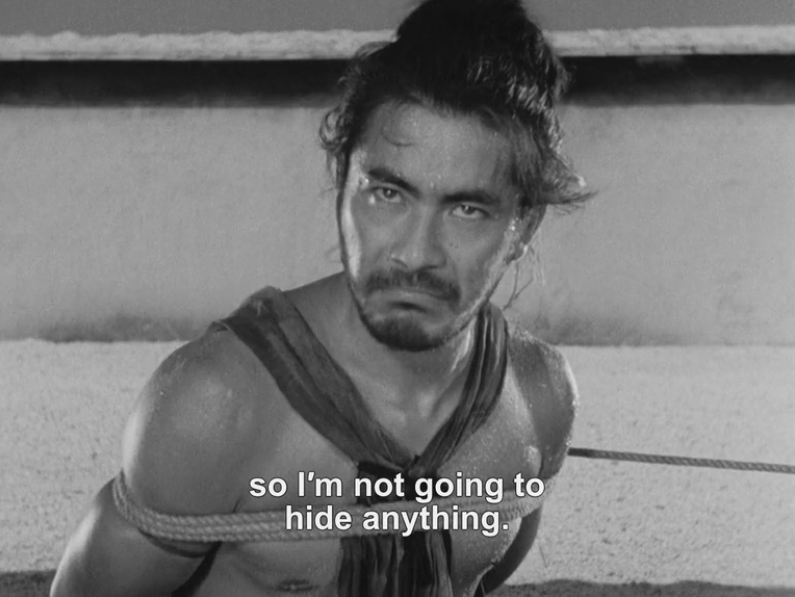
Apparently, he led the man to the bamboo grove by promising to sell him expensive goods cheap. Yes, this was before the internet existed, but it’s still pretty sketch. By doing so, Tajōmaru ambushes him and ties him to a tree while he takes advantage of the man’s wife. After doing so, the woman is so ashamed that she demands the two men fight to the death.
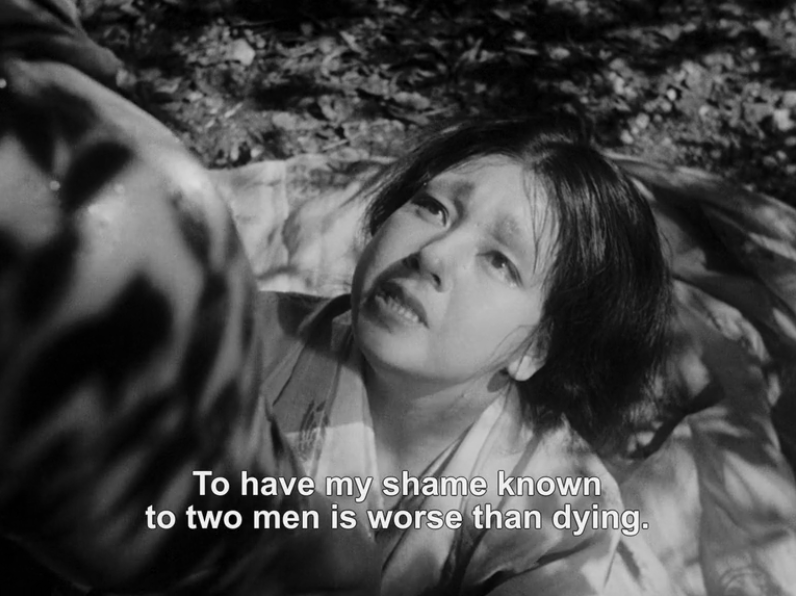
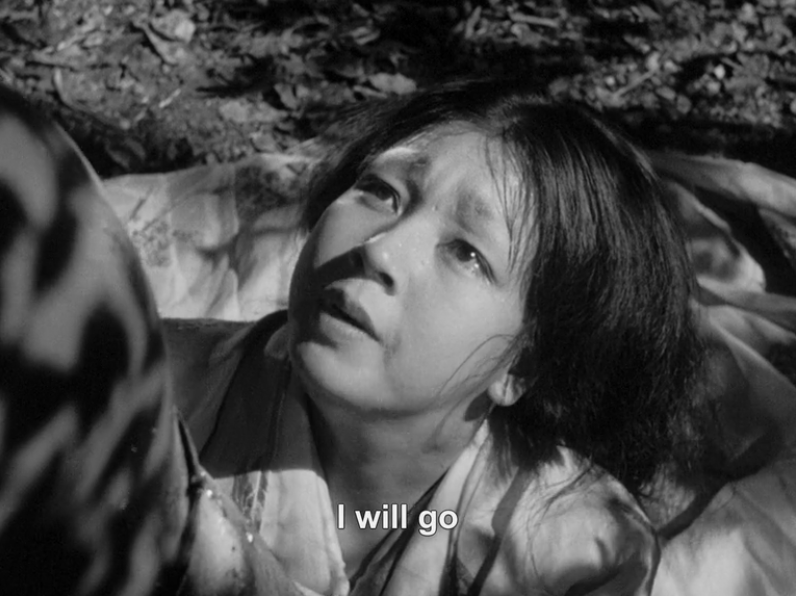
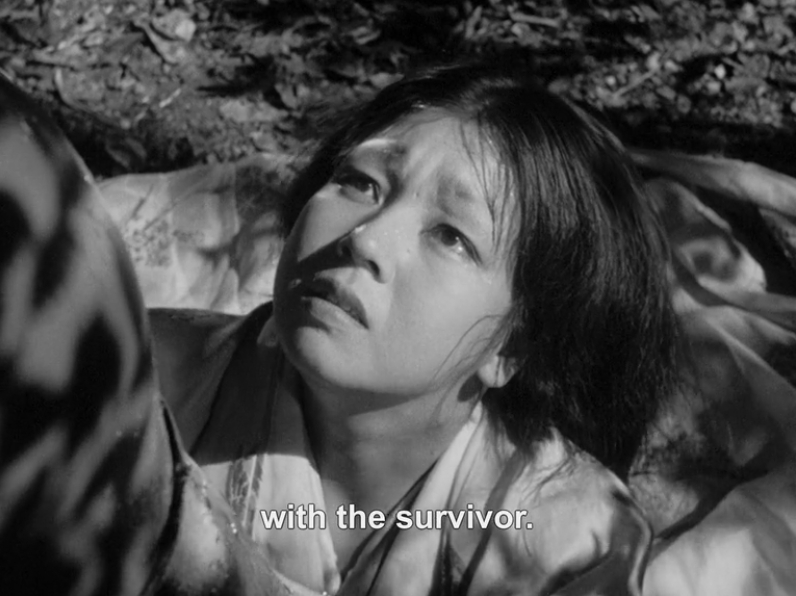
Naturally, Tajōmaru wins, but the woman ran away while he was fighting. Womp womp. So that’s Tajōmaru’s version of events. As you can reasonably believe, just from that brief summary, there’s a lot wrong with that. The fact the man believed Tajōmaru wanted to sell him expensive stuff for cheap is super weird. The man was apparently a samurai, so the fact Tajōmaru was able to overpower him so easily is very unbelievable. Also –
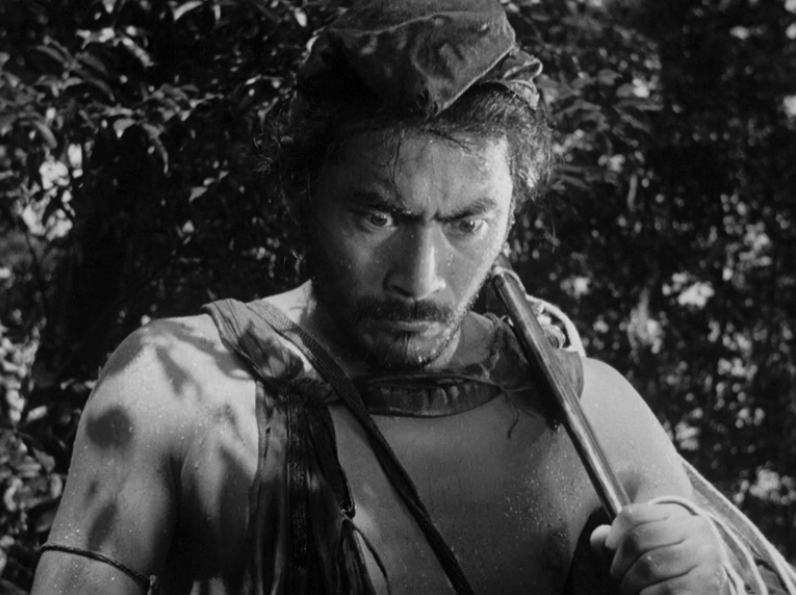
In my whole life, I don’t think I’ve ever seen anyone this sweaty.
That’s pretty sus right there.
 TGIMovies
Leave a comment