

Disclaimer:
This classic monster movie is Not Rated
I think most folks could get through it without issue, but it’s still a horror movie
In case you scare easily, you might wanna sit this one out
Ah, finally we’ve made it back around to Spooky Season! I love this time of year, mostly because I love horror an unhealthy amount. And what’s a better excuse to watch a crap-ton of horror than the imminent arrival of Halloween? Nothing, I say! Let me address what’s likely your first question, why this movie in particular? Well, if you’re new to my blog, I actually covered the Brendan Fraser Mummy movies in January. I felt like I owed it to the original to do this.
What I like most about these classic Universal monster flicks is their tone. They’re referred to as “horror,” but they’re more “unsettling dramas” than anything else. Sure they have creepy elements to them, but their primary purpose is to get you thinking. Each of them deals with a complex topic that’s tackled in its own unique and tragic way. In the case of The Mummy, the focus of the film is the power of love and its true cost.
While the Brendan Fraser remake kinda touched on this concept, it wasn’t the focus. The Mummy, however, approaches it from all angles in its hour and ten minute runtime. I’ll be honest, that’s another reason why I have a liking for these films. How they tackle complex subjects in a compelling way while also not being Lord of the Rings length is impressive. Although, why waste time introducing it when I should be reviewing it?
With all that said, let’s get ourselves wrapped up in The Mummy.
It probably goes without saying, but this movie is old. At the time this review is posted, it’ll be 93 years old. Yeah, that’s pretty old. Basically, my point is that this movie is not going to be for everyone. Its age alone is a deal-breaker for some folks, but even I acknowledge how odd it can be at times. Looking at it through a modern lens puts a heavy spotlight on how film has evolved over the years. Upon re-watching it, that was the first thing I noticed.

Back then, cinema was still widely viewed as “filmed theatrical performances,” and this camera shot supports that.
It allows you to take in the entire scenery as if you were watching this production from a stage.
While it may not seem like much, there just aren’t many shots like this in modern film anymore.
Speaking of things you don’t see in modern film anymore –

It doesn’t get much more obvious than seeing the play bill before the start of the show.
As cinema has developed, the focus on the “theatrical play” feel has been drastically reduced. Overall, it’s allowed filmmakers to innovate and make cinema into a unique artistic medium. Although, with the Universal monster flicks, the “theatrical play” feel helps create the creepy and personal environment portrayed within. Oftentimes the camera will hold on a shot for an uncomfortably long period of time making you feel uneasy.
This is especially clear whenever Imhotep (played by Boris Karloff [last seen on this blog attempting to ruin Christmas in Dr. Seuss’ How the Grinch Stole Christmas!]) is on screen. Just take a look at him being resurrected.


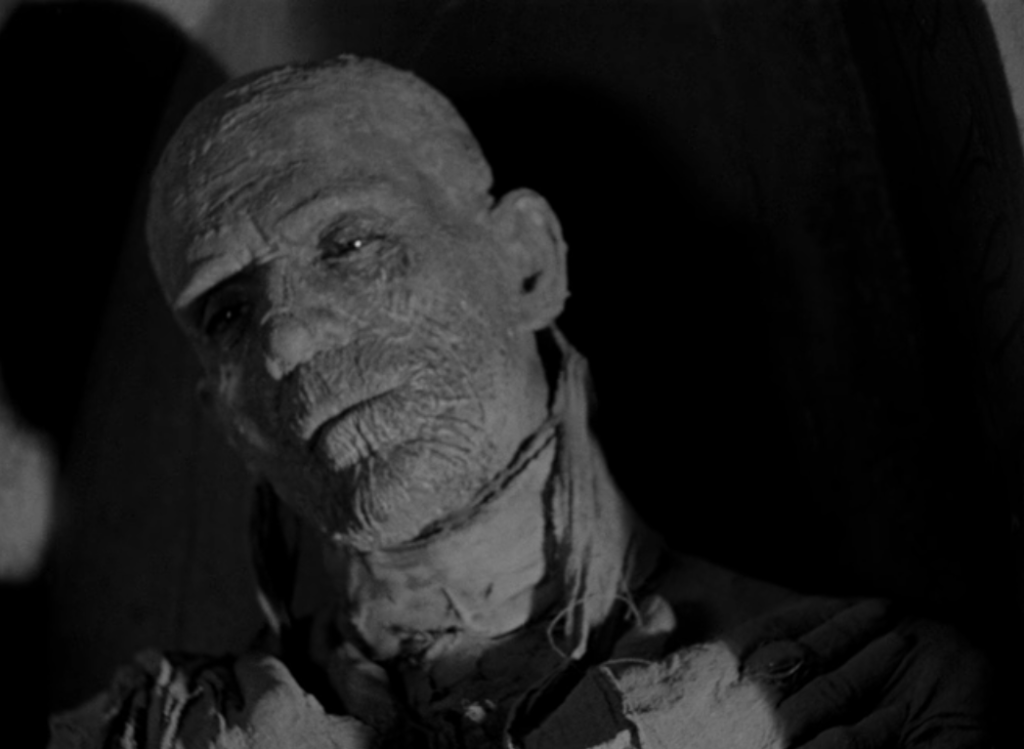
It’s much more quiet and subtle allowing goosebumps to crawl up your back while you imagine what he’s gonna do. In comparison to The Mummy (1999), I definitely prefer this resurrection.

It’s a more loud and in-your-face type of scary, but I’ve always preferred the slow, creeping type of horror.
That, and there are several dead silent moments with no dialogue or orchestrations which adds to the uneasy tone. Even if you don’t get into older movies, you can’t deny that this one is dripping with atmosphere. The only place it gets kinda shaky is the characters.
The characters aren’t very well-developed. More than anything, they’re just vessels to carry the story along. You’ll notice this with characters like Frank Whemple (played by David Manners) and Helen Grosvenor (played by Zita Johann). Both of them don’t have much personality and are simply tools of the script. How they’re acted supports this idea since neither of them seem fully invested in any of their scenes.


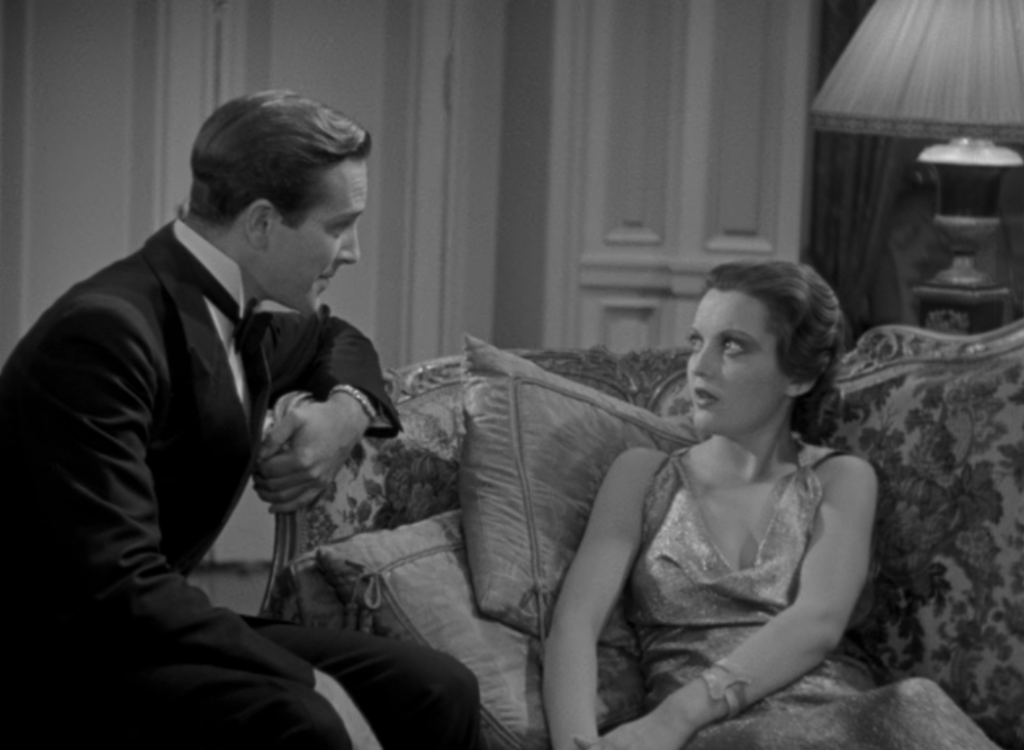

Y’all really…memorized those lines.
This is only one example, but believe me, most of the other characters have a similar way of speaking. Their dialogue is often fractured and clearly staged because it rarely ever sounds natural. You’ll see this is a pattern with other characters as well like Joseph Whemple (played by Arthur Byron) and Dr. Muller (played by Edward Van Sloan). They’re supposed to be close friends and colleagues, but they talk like every horror movie prophet in existence.

[JOSEPH] In the interest of science, even if I believed in the curse, I’d go on with my work for the museum.
I’ll admit that my opinion on this might not be accounting for the cultural differences. Cinema in the 1930s was much different and a lot has changed over the years. Although, it’s not like acting wasn’t a refined art form even then. You can tell because of the presence of Boris Karloff. Let me tell you, I’m captivated by him every time he’s on screen. Even the smallest details of his character he clearly took seriously.
As a mummy who rose from the dead, the way he moves makes him seem creaky, frail, and stiff.
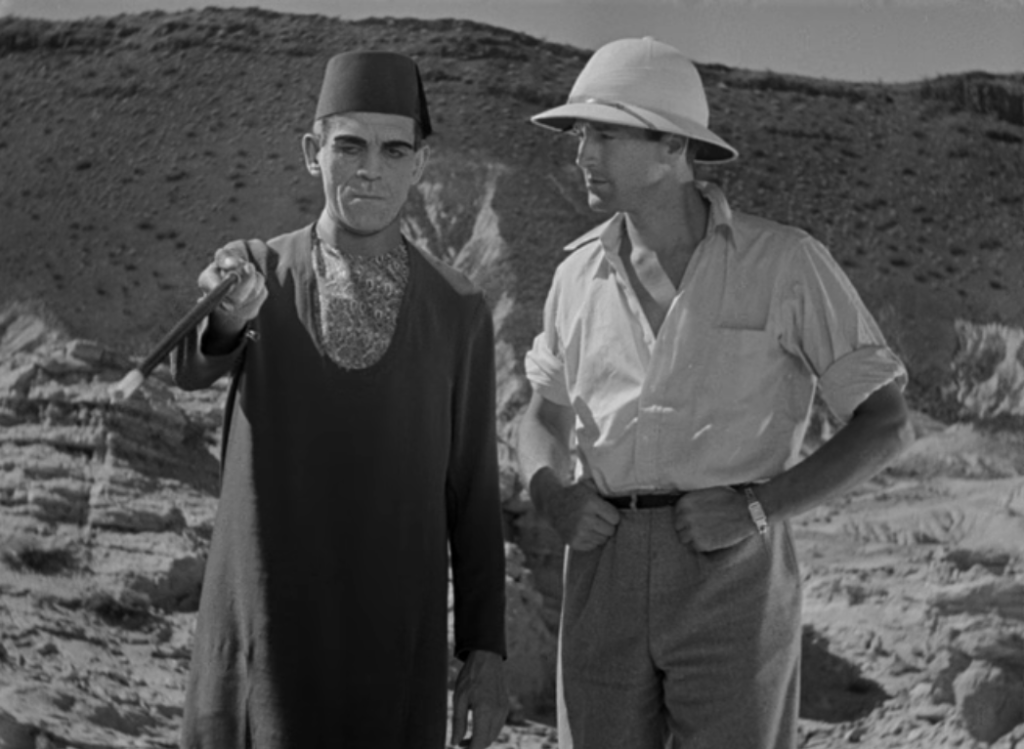
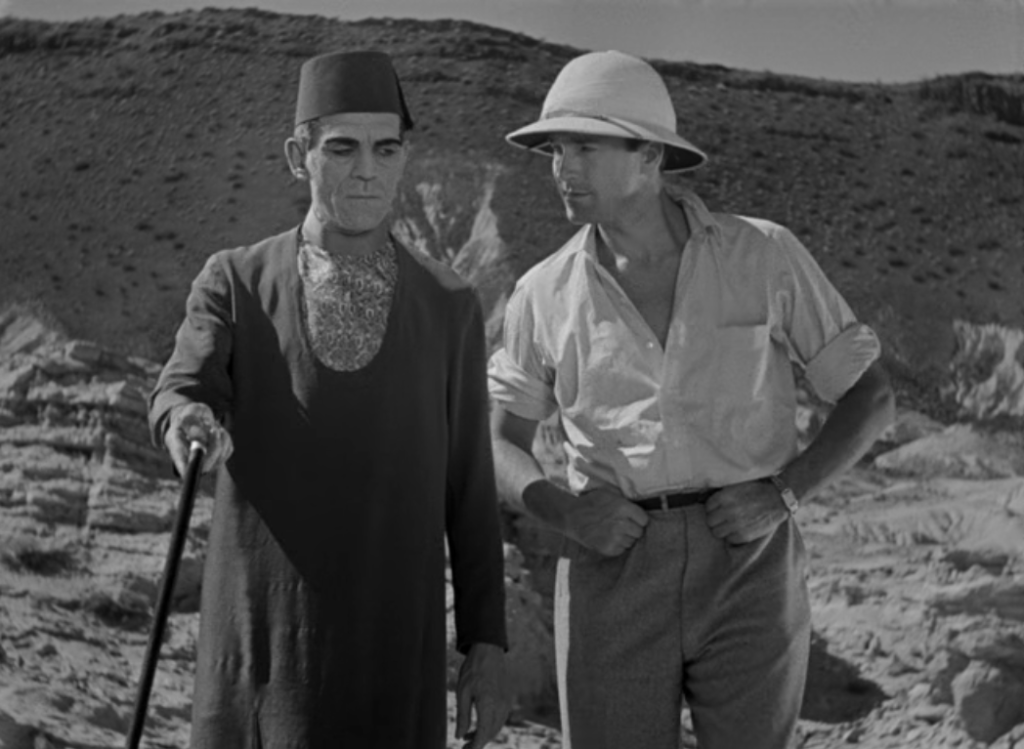
He doesn’t like being touched on account that his skin can be peeled off with ease.

And who could forget that death glare?
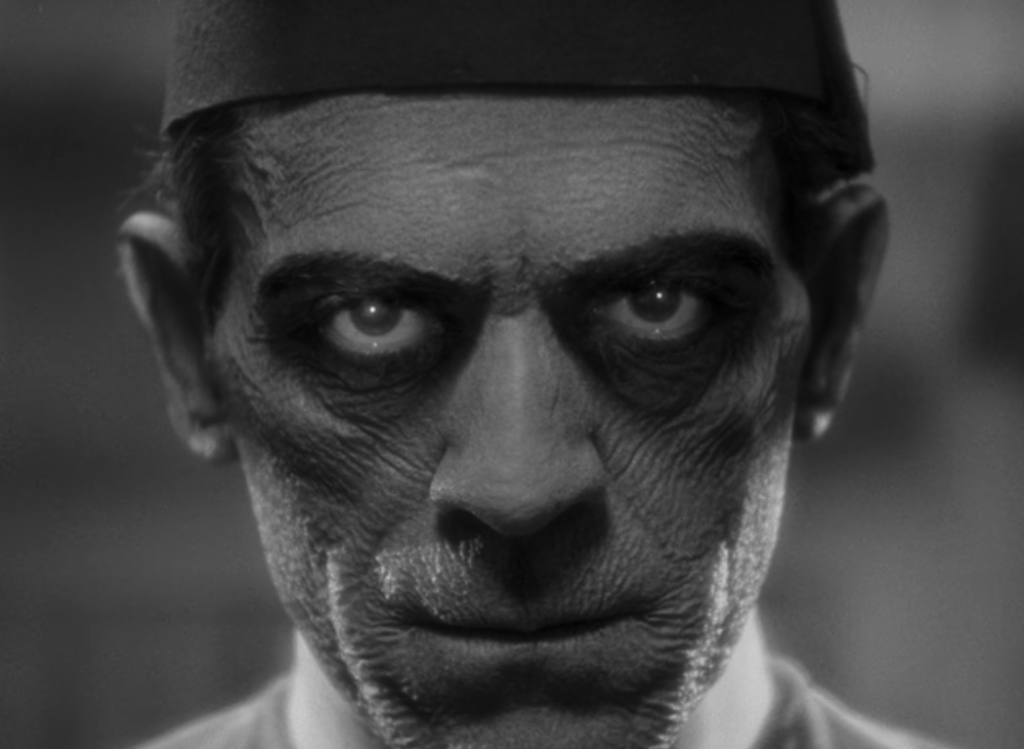
Even if the other actors are working at half-capacity, Karloff is clearly giving 110% in every scene. I’ll also say, the primary reason I enjoy this movie is Imhotep (shocker), his story, and the ramifications of it. Funny how the movie called The Mummy focuses on the mummy. Without a doubt, everything in this film revolves around Imhotep. But surprisingly, we don’t even learn his backstory until the last third of the movie.
If you’re familiar with The Mummy (1999), you probably know where this is going. However, there are some key differences between the remake and the original Imhotep’s stories. Here, Imhotep and his boo, Anck-es-en-Amon, have a more heartfelt and loving relationship. Instead of conspiring against Anck-es-en-Amon’s pharaoh father (played by James Crane), she actually dies of an illness.
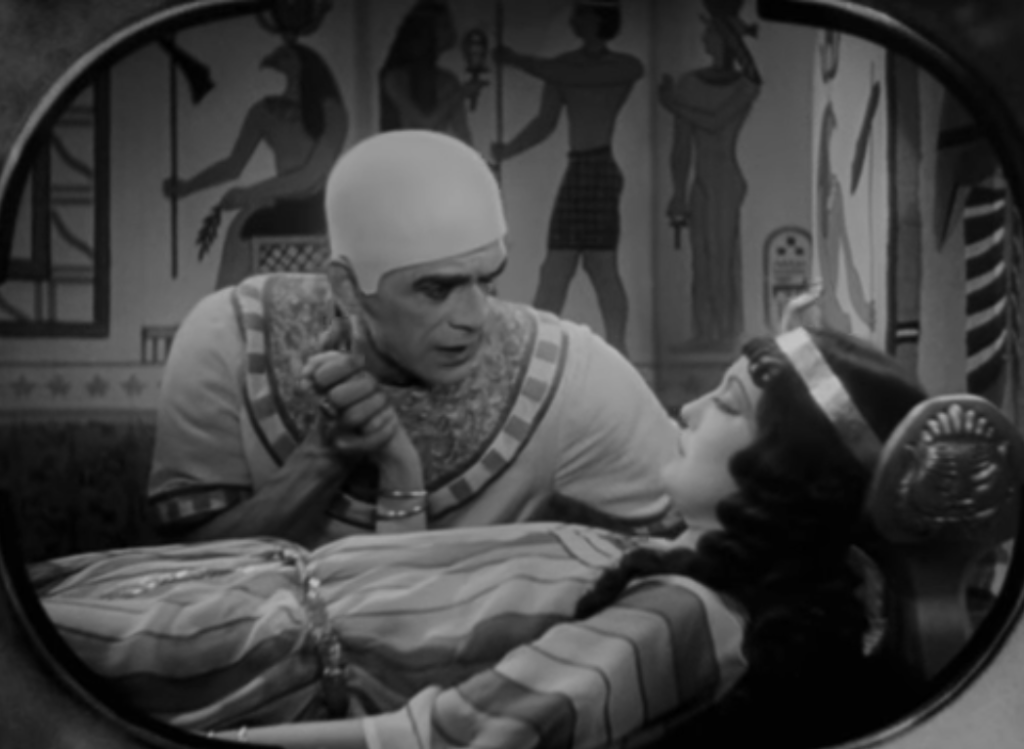
I prefer this over her committing suicide after killing her father. When she dies of an unexpected disease, it makes the loss feel more sudden, upsetting, and tragic. You can see it on Imhotep’s face as well as he tries to stay with her in her final moments. That and it makes their love seem much stronger.
Given the conspiracy against the pharaoh in the remake, it makes me question the two’s love for each other. When they kill him on a whim and die afterward, I wonder if what they had was really love. To me, that feels more like lust or young love (like in Romeo and Juliet) than true love. But here, it’s obvious that the two deeply care for each other. Even before Imhotep made the decision to revive his lover, you can tell he can’t live without her.
Also, instead of breaking out the curse of all curses on him, Imhotep was simply sentenced to death for sacrilege. Much simpler and to-the-point.
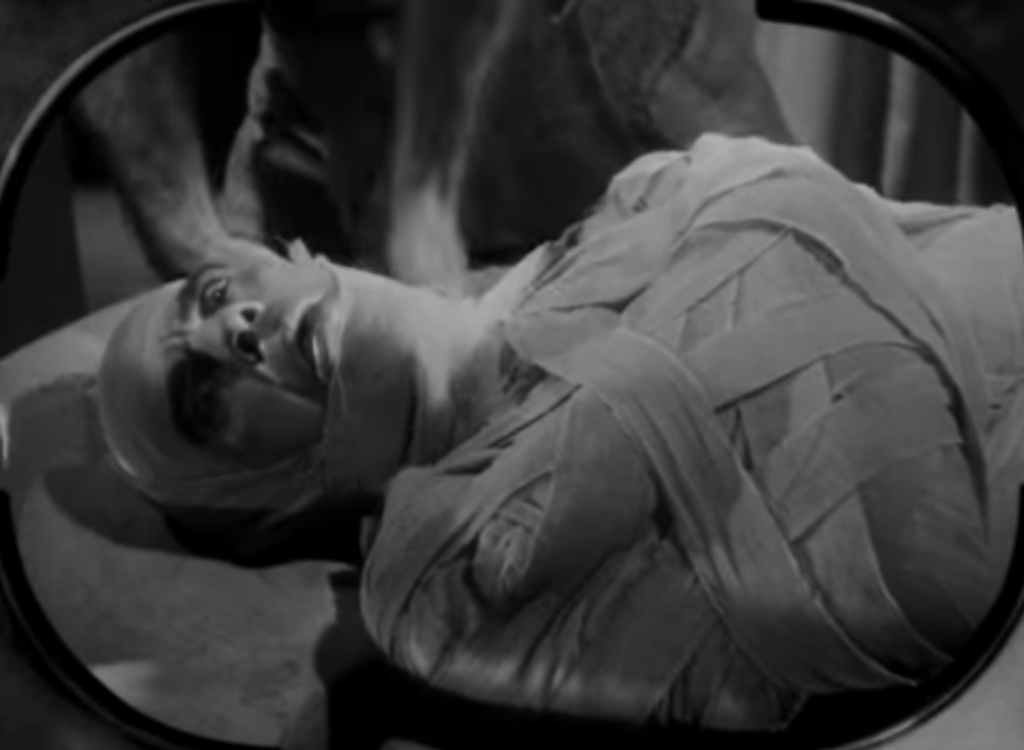
The only question that remains is how Imhotep obtains his mummy powers. At least with Mummy (1999), there’s a carve-out to give Imhotep ultimate power. An extremely stupid carve-out, but a carve-out nonetheless. With the original, it’s more subtle. Imhotep is revived using the “Scroll of Thoth.” This scroll was used in Egyptian mythology to bring Osiris back from the dead. Although, it was used by the goddess Isis. Clearly it was only meant for “god-use.”

For that reason, you can infer that Imhotep obtained god-powers from a god-scroll only intended for god-use. You can also see how a mortal using it to revive a mortal would be an act of sacrilege. I can’t help but respect how much info they packed into this film considering how little time they had. It’s legitimately impressive. However, I haven’t even spoken about my favorite part: the meaning behind it all.
Let’s examine Imhotep and Anck-es-en-Amon’s relationship in detail. We’ve established that they’re madly in love. How does Imhotep put it?
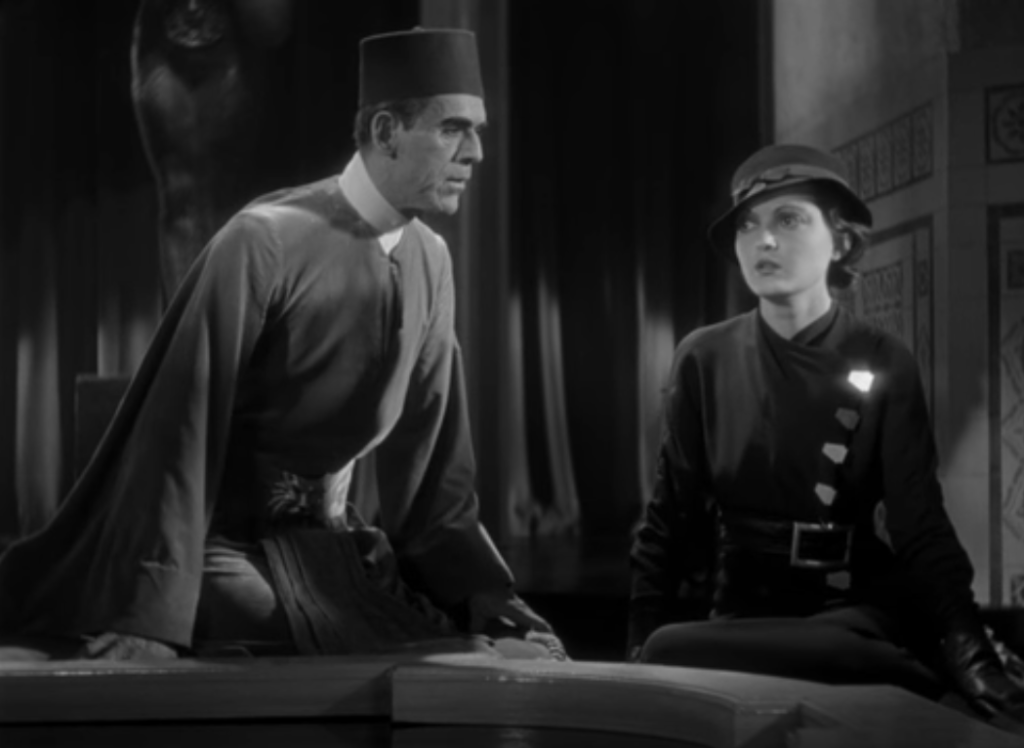
Exactly. Despite having been dead for 3,700 years, Imhotep is still in love with his bae. Despite having been condemned to suffer in the afterlife for eternity, Imhotep still wants ‘dat girl. Let’s just take a second to think. Given this setup, the Egyptian mythology is clearly real (in the context of the movie). Imagine if Imhotep had just lived his life after Anck-es-en-Amon passed. He eventually would’ve been reunited with her in the afterlife.
However, by trying to cut corners and bring her back from the dead, he’d never see her again. Especially since Ancient Egyptians saw death as their retirement plan. So now he’s caught in a constant battle with the gods to get back what he lost for himself. It highlights how love can be both very strong and humanity’s greatest weakness. It can last a long time, but it often clouds our judgment, makes us reckless and can tear us apart.

In this process, Imhotep has to kill Helen to bring back Anck-es-en-Amon’s soul in her body. But, as Helen frantically puts it:

Yes, by attempting to regain what he lost Imhotep would be taking something else. That being a human being with their own life, memories and feelings. He may have had the best of intentions by trying to be with Anck-es-en-Amon again, but all things end. Since he can’t accept that, he’ll be doing real harm to real people. You can also say he bit off more than he could chew by messing with things he didn’t fully understand. Which is also what the Whemples did.
I still prefer Imhotep’s character over anyone else in the film. Although, Frank and Joseph Whemple do a great job of paralleling Imhotep’s recklessness. Joseph (along with an Oxford colleague) is the first to discover Imhotep’s sarcophagus and the casket containing the scroll. As a scientist (slash grave robber), he wants to study everything. If he studies the scroll though, that’ll result in Imhotep’s revival. And it’s also what ultimately happens.


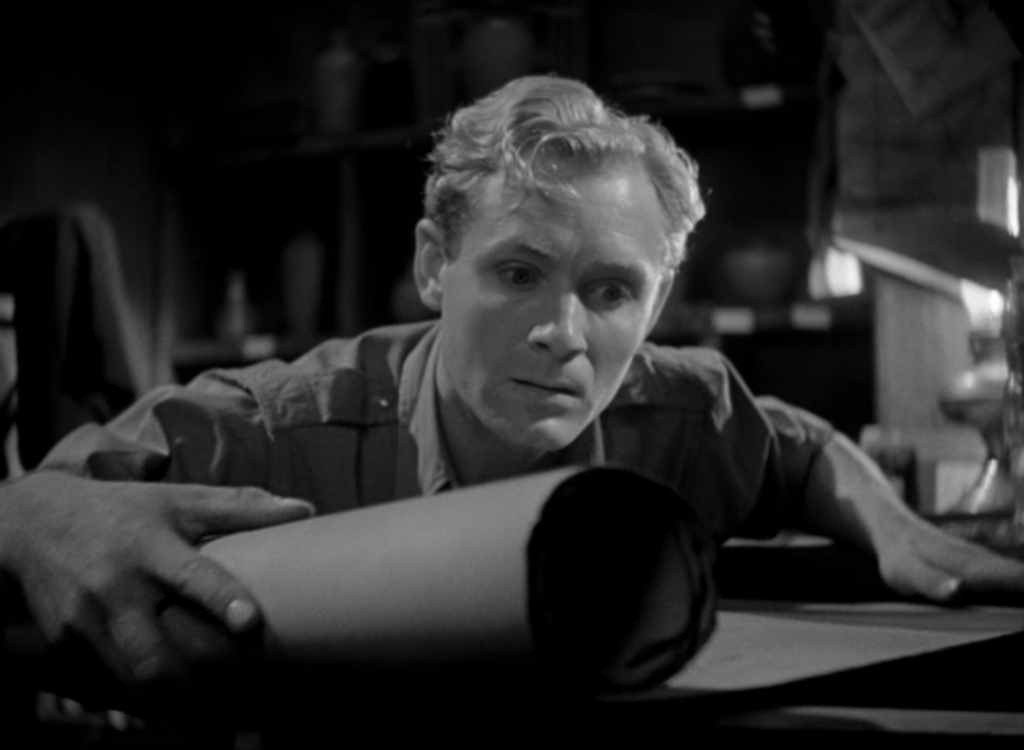
There was clearly a curse written on the casket. “Under the penalty of death, do not open this casket.” …But science, though. Is it really for science, though?

Whatever helps you sleep at night knowing you completely ravaged a culture’s history.
That’s the point. We may say we want to study certain things for the sake of understanding. That could be partially true. Then again, it could just as easily be for the sake of greed and glory. Also, are we as humans even meant to understand everything? We have highly advanced brains capable of comprehending more than any other species in the animal kingdom. But we haven’t accepted the fact that we’re not meant to understand certain things.
Imhotep can’t accept how his love was taken too early. The scientists can’t accept how humans shouldn’t or can’t understand some things. In attempting to understand them, we end up causing more harm than good. That’s easily one of the most enduring messages of this movie.
Even in just an hour and ten minute run-time, this movie still leaves a lot of unanswered questions. Although, these are questions I’d gladly consider for long periods of time. That’s the sign of a powerful and unique experience. It’s also something that modern cinema doesn’t focus on much anymore: life’s difficult questions.
The more I watch this, the more it makes me think and I feel all the better for it. At the same time, in my attempt to answer these questions, it raises even more questions. Given that humans shouldn’t or can’t understand everything, do these questions need answers? Does every question need an answer?Hmm…that’s a head-scratcher. With that said, do I even need to finish this conclusion? I’m kidding, that one’s an obvious “yes.”
Despite not being a horror film that’s in-your-face, I still get creeped out by it. Why is that? Well, because it travels beyond the boundary of the screen and makes me question my own existence. When a horror movie becomes more than just a movie, that’s when it’s the scariest to me. Especially since, as I mentioned previously, this movie is 93 years old. These questions remain unanswered nearly a century later. That’s kinda terrifying.
Because of that, The Mummy is still my favorite “Mummy” film. I’ll be honest, I still have a soft spot for The Mummy (1999). Instead of being thought-provoking it focused on being fun. That isn’t necessarily a bad thing and I like it in its own way because of that too. However, if you haven’t seen The Mummy, I highly recommend it.
I’ll give The Mummy a 4/5 Yummy Mummys. Don’t get me wrong, I still enjoy it a lot. Although, there are some notable things that prevent it from being “outstanding.” Like before, I mentioned how the acting can be clunky and the characters underdeveloped. The writing can be inorganic and awkward too, but it in no way overshadows the good stuff. At least to me. If you can look past that, I promise you’ll find a classic monster flick you’ll never forget.

Jeez, I’m getting old.
In case the movie I chose to cover wasn’t already proof of that.
(I make no claim of ownership for any of the images used in this post)
(Each of them are owned entirely by their respective copyright holders, which are not me)
(I’m just a humble blogger who talks about movies, I do not make them)
(Despite my looks, I’m not over 100 years old)
 TGIMovies
Leave a comment